Apple Unveils AI-Powered Siri Overhaul at WWDC 2026
Apple officially debuted a significant transformation for its digital assistant during the Worldwide Developers Conference (WWDC) 2026 on Monday. Moving beyond its roots as a basic voice-controlled tool, the new “Siri AI” is designed to function as a comprehensive conversational companion, signaling the company’s direct response to competitors like ChatGPT, Gemini, and Claude.
The updated assistant, which will enter a beta phase later this year, is built to process real-world knowledge to ground its responses. It gains the ability to analyze information directly from a user’s device screen, providing context-aware assistance that was previously unavailable.
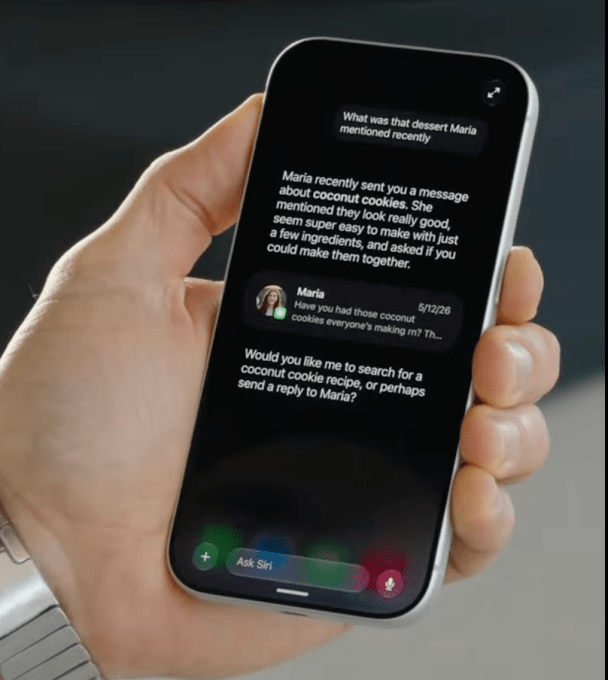
New Interface and Deep System Integration
The redesign is visually distinct, moving away from the traditional screen-glow effect. Siri now lives within the Dynamic Island, featuring a new animation when triggered. Users can interact with the assistant through a dedicated app, by using the side button, or by saying “Hey Siri.”
The system is also becoming more deeply woven into the Apple ecosystem:
- macOS: Siri is now integrated into Spotlight, allowing for direct answers to queries.
- watchOS: Users can execute actions and ask complex questions directly from their wrist.
- Text Cards: The assistant provides visual results, displaying web information or details pulled from messages.
Advanced Writing and Personalization
A standout feature is “Write with Siri,” which assists users in drafting emails and messages. The tool is designed to learn individual communication styles, adjusting the tone and structure of text to mirror how a user typically interacts with specific colleagues or friends.
Furthermore, the update brings a more natural voice experience with customizable pacing and expressivity. System-wide dictation has also been improved, offering higher precision in capturing punctuation, capitalization, and spelling. Beyond basic tasks, the new Siri is capable of handling complex projects, such as brainstorming, reviewing documents, and creating detailed plans by synthesizing data from calendars, contacts, and prior email correspondence.