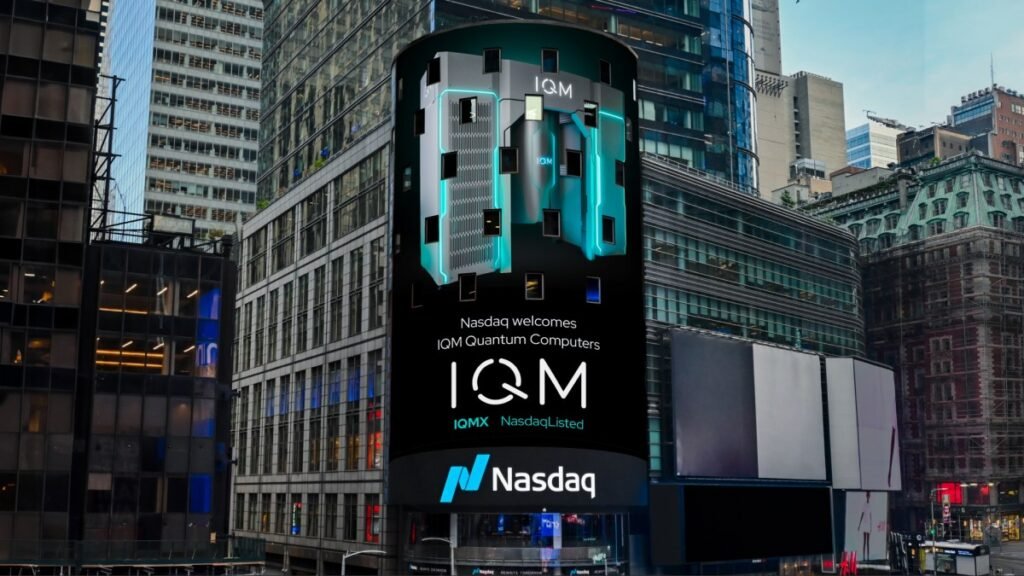
IQM Lists on Nasdaq: Quantum Pioneer Faces Market Skepticism
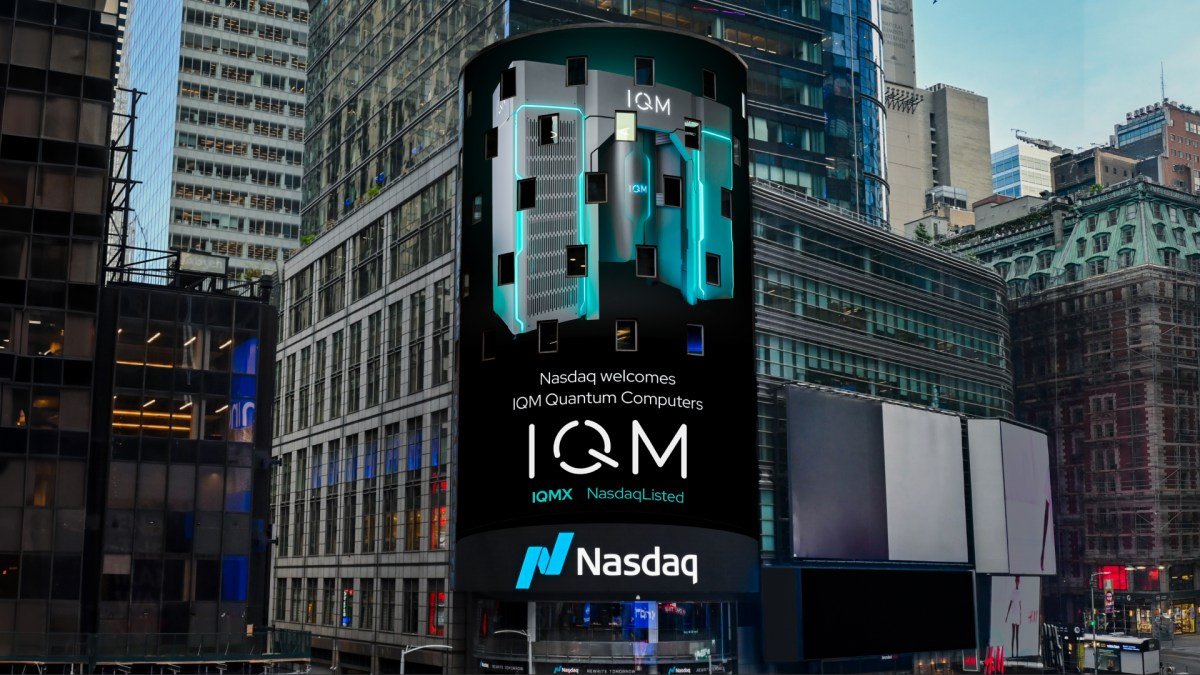
Finland-based IQM officially hit the public markets this Thursday, marking a historic milestone as the first European quantum computing firm to list on a major U.S. exchange. The company entered the Nasdaq via a SPAC merger valued at approximately $1.9 billion, though the debut saw a lukewarm reception, with shares trading below their initial offering price throughout the day.
A Candid Reality Check for Investors
While SPACs have faced cooling interest from retail investors, IQM’s entry was tempered by an unusually transparent warning in its prospectus. The company explicitly cautioned that “large-scale commercial traction of quantum computing technology may never occur.”
This disclosure highlights the inherent volatility of the sector. Despite the long-term uncertainty, IQM is currently generating revenue by providing physical hardware and cloud-based computing time to research institutions. Its client roster includes the VTT Technical Research Centre of Finland and the Leibniz Supercomputing Centre in Germany.
“We sell computers into advanced supercomputing centers and data centers, and we sell computing time through the cloud,” CEO and co-founder Jan Goetz told TechCrunch.
The Race Toward Quantum Advantage
IQM has seen its client base expand from eight in 2024 to 22 by 2025, a growth trajectory that now includes private sector partners. However, industry-wide scaling remains tethered to the concept of “quantum advantage”—the point at which quantum processors consistently outperform classical machines in complex tasks like biotech simulations or advanced encryption. Currently, no firm can pinpoint exactly when this threshold will be reached.
The sector is receiving a significant boost from government initiatives. Recent executive orders from President Trump aim to accelerate quantum development, with the U.S. Department of Energy (DOE) targeting 2028 for the deployment of a fault-tolerant, scientifically relevant quantum computer. This shift provides a strategic opening for IQM, which has already established a presence in Maryland and deployed hardware at the Oak Ridge National Laboratory.
“We can benefit directly from it,” Goetz noted regarding the U.S. policy push.
Maintaining European Roots
Despite its U.S. listing, IQM is maintaining a dual-market strategy. The company is set to begin trading on Nasdaq Helsinki tomorrow, banking on continued support from investors like Finland’s sovereign wealth fund, Tesi. The firm remains deeply tied to its origins, having spun out of Aalto University in 2018. Of its 420 employees, the majority remain in the Espoo hub, while roughly 100 staff members are based in Munich.
The merger with RAAQ, the blank check company behind the deal, was predicated on IQM’s dual strength: its ability to secure over €200 million in European public funding while simultaneously establishing a credible footprint in the U.S. market.
For Goetz, the primary objective of the listing is to secure liquidity and cement the company’s position in a high-stakes industry. The operation is expected to net roughly €198 million ($226 million) after costs, following a $300 million raise last September. “It always feels good to be first and to be a pioneer, but ultimately it’s about long-term success,” Goetz said.