YouTube expands deepfake detection to political figures
YouTube is rolling out a new pilot program designed to protect public figures from unauthorized AI-generated deepfakes. The initiative grants a select group—including government officials, political candidates, and journalists—the ability to identify synthetic content mimicking their appearance and request its removal if it violates platform policies.

How the Detection Technology Functions
The system functions similarly to YouTube’s established Content ID system, which is primarily used to flag copyrighted material. In this case, the software scans for simulated faces created via AI tools. This technology was previously deployed to approximately 4 million creators within the YouTube Partner Program.
Leslie Miller, YouTube’s vice president of Government Affairs and Public Policy, stated that the expansion addresses the integrity of public discourse. “We know that the risks of AI impersonation are particularly high for those in the civic space,” Miller noted during a press briefing, adding that the platform remains cautious about balancing this new “shield” with free expression.
Policy and Verification
Not every flagged video will be removed. YouTube intends to evaluate requests against existing privacy guidelines, ensuring that content categorized as parody or political critique—which are protected forms of speech—remains on the platform.
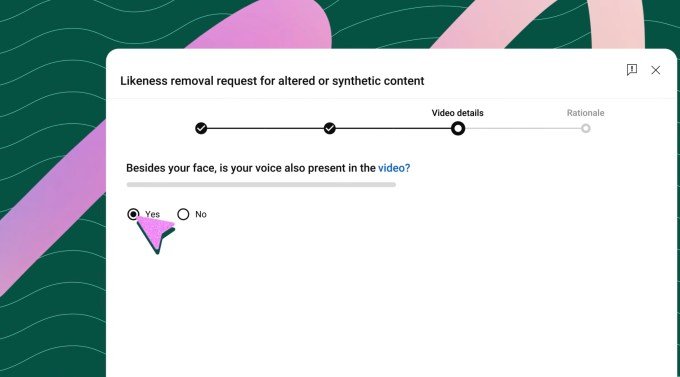
To participate in the pilot, users must undergo a verification process:
- Upload a selfie for identification.
- Provide a government-issued ID.
- Create a dedicated profile to monitor and manage potential matches.
Future Roadmap and Legislation
Amjad Hanif, vice president of Creator Products, noted that while removal requests have been “very low” among general creators, the stakes are different for civic leaders. YouTube is also supporting the federal NO FAKES Act, which seeks to regulate unauthorized AI recreations of individuals’ likenesses and voices.
In the future, the company aims to expand these protections to include spoken voices and other intellectual property, such as recognizable fictional characters. Long-term goals include allowing users to prevent violating content from ever being uploaded or potentially monetizing it, mirroring the functionality of the existing Content ID framework.