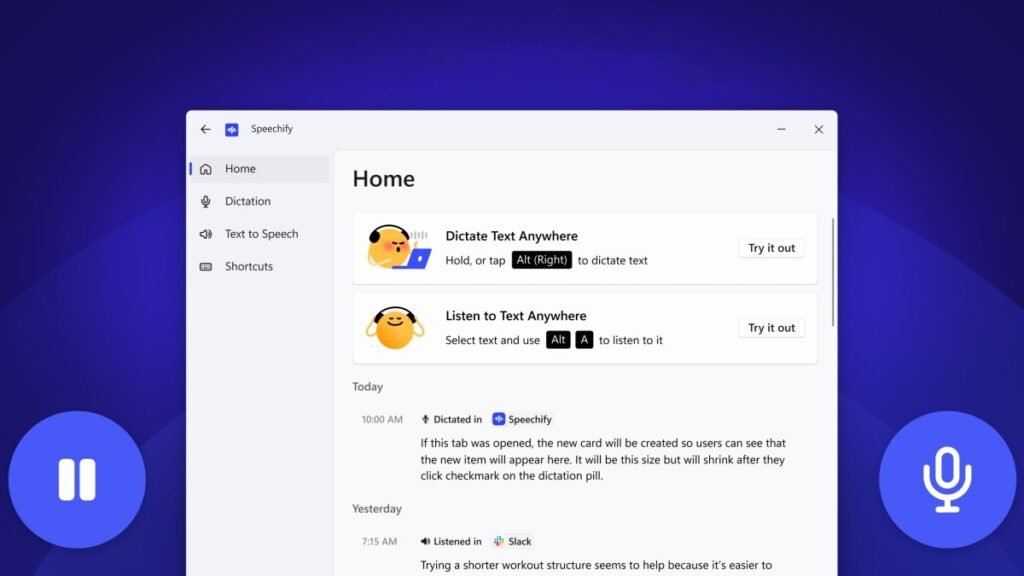
Speechify Launches Native Windows App With Local AI Models
Speechify has officially expanded its ecosystem with the release of a native Windows application. The software leverages locally stored AI models to provide system-wide dictation capabilities and text-to-speech functions, allowing users to process documents, PDFs, and articles directly on their machines.
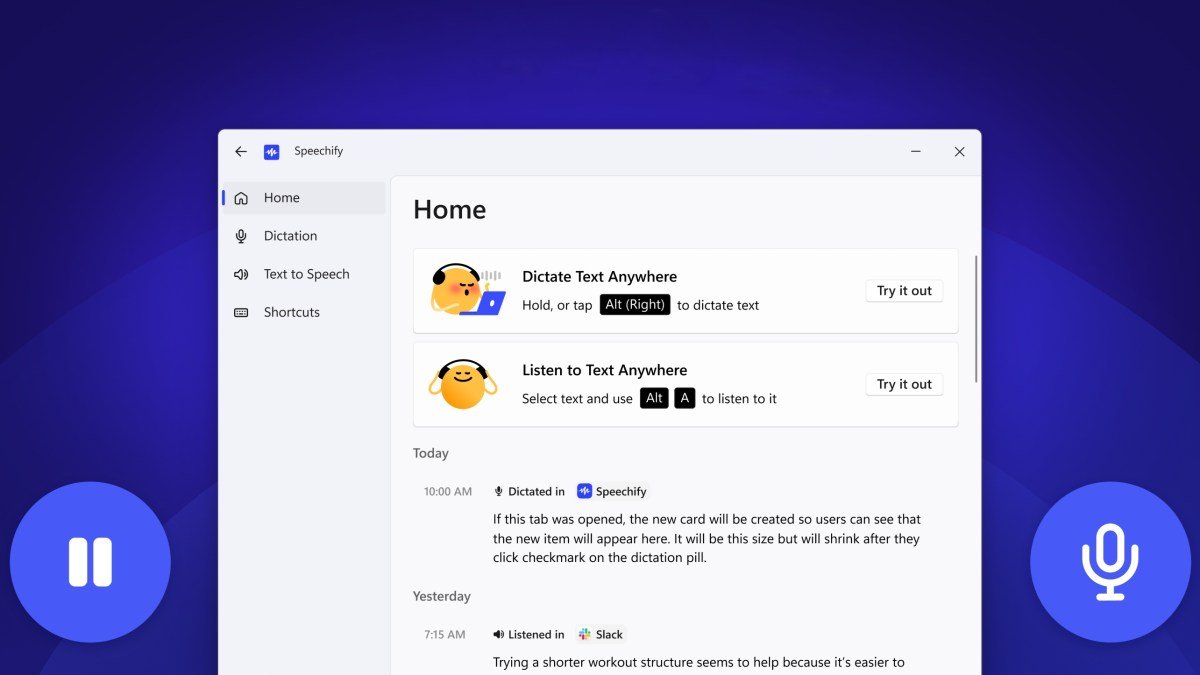
By moving voice processing to the local hardware, the company aims to improve performance and data privacy. The application is optimized for Copilot+ PCs equipped with NPUs from Qualcomm, Intel, and AMD, as well as general Windows 11 devices running Intel or AMD GPUs.
Advanced AI Architecture
The new Windows client integrates three distinct models designed to function on-device:
- Whisper-powered transcription: Handles speech-to-text conversion.
- Neural Text-to-Speech: Utilizes the proprietary SIMBA model to generate audio across seven speed presets.
- Voice Activity Detection: Employs the open-source Silero model to identify speech in real-time.
While the focus remains on local processing, Speechify provides configuration options that allow users to toggle between on-device and cloud-based models based on their specific workflow requirements.
Strategic Expansion for Enterprise
With a user base exceeding 50 million people, the company views this launch as a critical step in professional productivity. CEO and founder Cliff Weitzman noted that the transition to a native PC environment addresses long-standing demand from enterprise clients.
“Over a billion people on this planet use Windows. With this Windows launch, we’re making sure that reading, and now writing, is never a barrier, no matter what device you use or how you prefer to work,” Weitzman stated.
Broadening the Feature Set
This release marks a significant shift in Speechify’s product trajectory. Previously recognized primarily for its text-to-speech capabilities—such as converting emails and documents into podcasts—the company is rapidly evolving into a full-stack voice platform. This move positions the firm to compete directly with existing dictation and transcription services like Superwhisper, Willow, and Wispr Flow.
The company recently introduced meeting transcription features, which were initially restricted to browser-based interfaces. The launch of the native Windows app suggests that these transcription tools will soon be integrated into the desktop experience, enabling cross-application meeting recording regardless of the platform used.