Google Updates Android Sideloading to Balance Security
Google is refining how Android users install apps from outside the Play Store, introducing a new “advanced flow” designed to preserve user freedom while countering the tactics used by modern scammers. This update follows the recent conclusion of a long-standing antitrust legal battle concerning the Android ecosystem.
The company is shifting away from rigid restrictions toward a more nuanced approach. While Google previously mandated that all apps on certified devices be registered by verified developers to curb malware and financial fraud, the new mechanism allows users to consciously opt out of these protections for specific needs.
Friction as a Security Layer
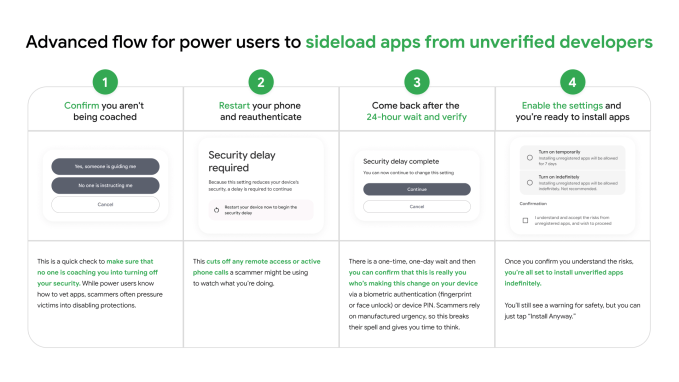
To prevent bad actors from manipulating victims—who are often coerced into disabling security settings during high-pressure phone calls—Google is building specific “speed bumps” into the process:
- Developer Mode Requirement: The flow begins by requiring users to enable developer mode, a step intended to stop “one-tap” bypasses often exploited by scammers.
- Reauthentication: Users must restart their device and reauthenticate, a move designed to sever any active remote access or ongoing phone calls where a scammer might be guiding the victim.
- Protective Waiting Period: A one-day waiting period is enforced before the change takes effect, giving users time to reconsider actions taken under duress.
- Biometric Confirmation: Once the waiting period concludes, users must confirm the change using a PIN or biometrics like a fingerprint or face unlock.
According to data from the Global Anti-Scam Alliance (GASA) cited by Google, 57% of adults globally encountered a scam in 2025, highlighting the prevalence of threats that rely on manufactured urgency.
Expanded Access for Developers
Once the process is complete, users can choose to enable sideloading for seven days or indefinitely. Even with these protections disabled, the system will continue to display warnings when an app originates from an unverified developer.
Beyond these changes, Google is lowering barriers for smaller creators by offering free, limited distribution accounts. These allow students and hobbyists to share applications with groups of up to 20 users without the need for government ID verification or registration fees.
These adjustments arrive in the wake of the settlement between Google and Epic Games, which also saw Google reduce Play Store commissions to 20% for in-app purchases, with an additional 5% applied if developers opt to use Google’s billing system.