
Zoom Launches AI Avatars and Productivity Suite This Month
Zoom is set to roll out its highly anticipated photorealistic AI avatars later this month, marking a significant expansion of the company’s artificial intelligence capabilities. These digital twins are designed to mirror a user’s expressions, eye movements, and lip-syncing, serving as a substitute during video calls or asynchronous messaging when a user is not camera-ready.
To mitigate security risks associated with this technology, Zoom is simultaneously launching integrated deepfake-detection tools. This feature is intended to alert participants in real-time if there is a suspicion of audio or video impersonation during a meeting.
Expanding the AI Ecosystem
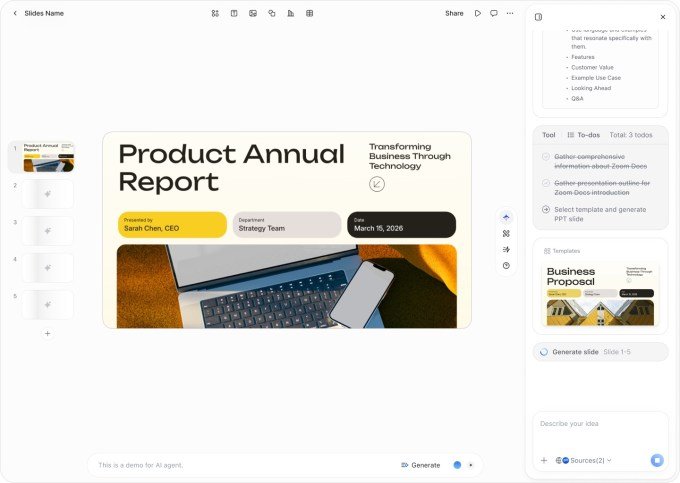
Beyond avatars, the company is moving deeper into the office software market. It announced a suite of productivity applications—AI Docs, Slides, and Sheets—scheduled for a spring preview. These tools will leverage data from meeting transcripts and existing services to generate document drafts, spreadsheets, and presentations automatically.
The company also highlighted several updates to its broader platform infrastructure:
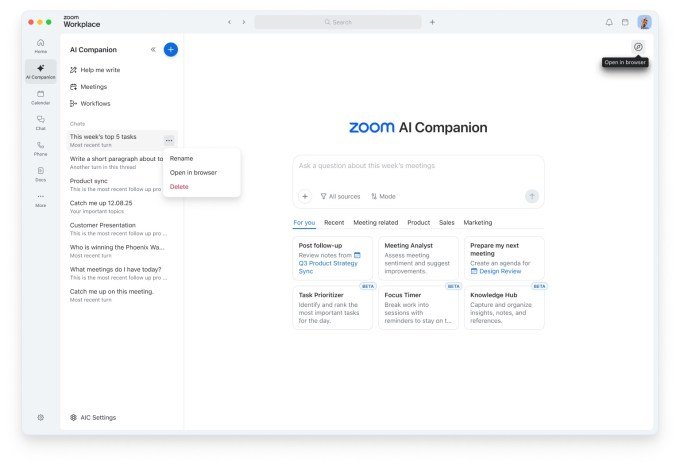
- AI Companion 3.0: Now integrated into the desktop application, following its web debut in September. Zoom reported that active usage of this companion more than tripled in Q4 FY 2026.
- Custom AI Agents: Non-technical users can now build agents using natural language prompts to handle tasks across various platforms.
- Workvivo Integration: The employee communication app will now feature an AI assistant capable of querying data from external services like Salesforce, Slack, Jira, Asana, Gmail, and Outlook.
Developer Tools and Unified Design
For developers, Zoom is providing access to its speech, vision, and language intelligence APIs, which can be deployed either in the cloud or on-premise. Additionally, the company is refining its chat interface by employing AI to summarize conversation threads and highlight key insights.
To ensure a consistent user experience, Zoom plans to unify the design across its desktop, mobile, and web surfaces. This update aims to simplify access to AI-driven features like meeting transcriptions, notes, and specific meeting queries. These moves place Zoom in direct competition with other established players like Canva and various startups entering the AI-first office software space.