YouTube to Automatically Label AI-Generated Content
META_DESCRICAO: YouTube is launching automatic labels for photorealistic AI videos to increase transparency, moving beyond reliance on creator disclosures.
TAGS: YouTube, Artificial Intelligence, Content Moderation, Tech News, Google
CONTEUDO:
YouTube is shifting its approach to transparency regarding synthetic media. Starting this May, the platform will begin automatically applying labels to videos that feature “significant photorealistic AI” content, reducing its previous reliance on creators to self-disclose the use of generative tools.
The company announced that while creators are still encouraged to declare the use of AI, the platform’s internal systems will now proactively step in to identify and tag content that could be mistaken for real-world events, people, or locations. This move follows the recent introduction of multimodal models like Gemini Omni, which demonstrate an advanced grasp of physics, history, and science in video generation.
Enhanced Visibility for AI Labels
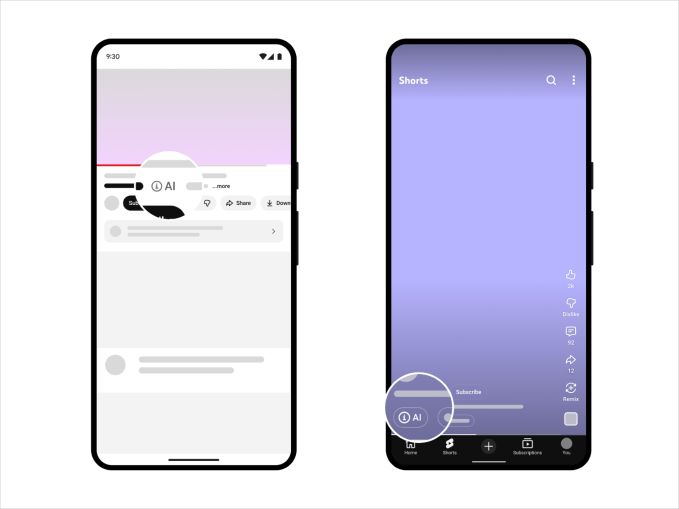
Beyond the detection update, the platform is changing where these labels appear to ensure they are more noticeable to viewers. Previously, most AI disclosures were tucked away within the expanded video description. The new design will prioritize visibility:
- Long-form videos: Labels will appear directly below the video player, above the description.
- YouTube Shorts: Labels will be overlaid directly onto the video content.
- Unrealistic content: Animations or clearly imaginative content, such as a unicorn in a fantasy setting, will continue to have labels restricted to the expanded description.
Technical Standards and Policy Constraints
The platform is also integrating support for C2PA metadata, which provides a permanent record of a file’s provenance. Videos containing this metadata, which confirms the content is entirely AI-generated, will be labeled automatically and permanently. Several major industry players, including OpenAI, Nvidia, and ElevenLabs, have already committed to this standard.
For creators, the new system includes specific guardrails:
- If a video is misidentified as AI-generated, creators retain the ability to update the disclosure status.
- Labels cannot be removed if the content was produced using proprietary tools, such as Veo or Dream Screen.
- YouTube explicitly stated that these labels will not influence a video’s recommendation algorithm or its monetization eligibility.
This initiative arrives alongside the recent expansion of deepfake detection tools. Initially tested with public figures and politicians, the detection system is now available to all adults, allowing users to scan for face matches to identify unauthorized synthetic representations.