Cerebras IPO Marks Milestone for Eclipse Ventures’ Bet
When Lior Susan founded Eclipse Ventures in 2015, the firm’s focus on digitizing physical infrastructure stood in stark contrast to the dominant Silicon Valley trend of prioritizing enterprise SaaS. During the firm’s early years, this thesis often left the team operating outside the mainstream venture capital narrative.
That isolation has shifted into a dominant market position. This week, the public debut of semiconductor firm Cerebras Systems delivered a $2.5 billion return for Eclipse. The venture firm, which originally invested $6.5 million during the company’s 2016 Series A, ultimately deployed $147 million into the business, resulting in a seventeenfold return at the $185 per share IPO price.
The shift from SaaS to physical tech
For Susan, the success of the Cerebras IPO serves as proof of a broader conviction: with 85% of global GDP tied to the physical world, the most lucrative opportunities lie in hardware-software integration rather than purely digital products. The market appears to be catching up, as companies like TSMC and Micron reach record valuations while founders increasingly pivot toward industrial-scale challenges.
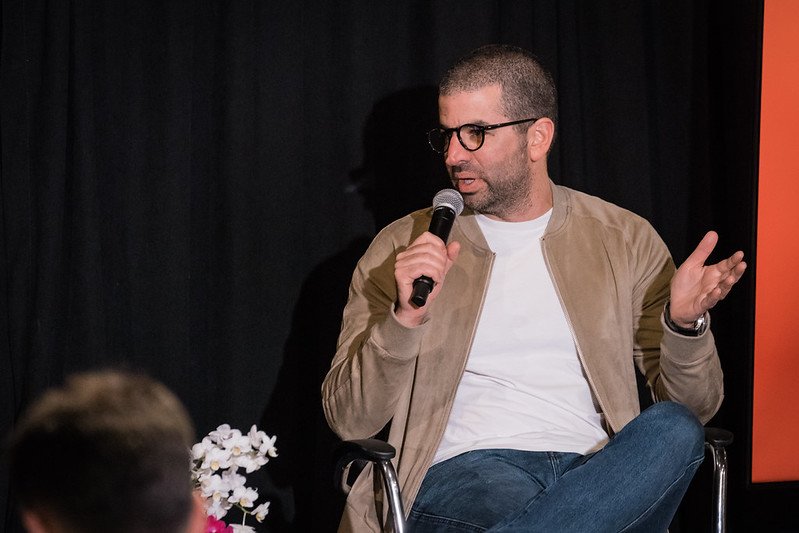
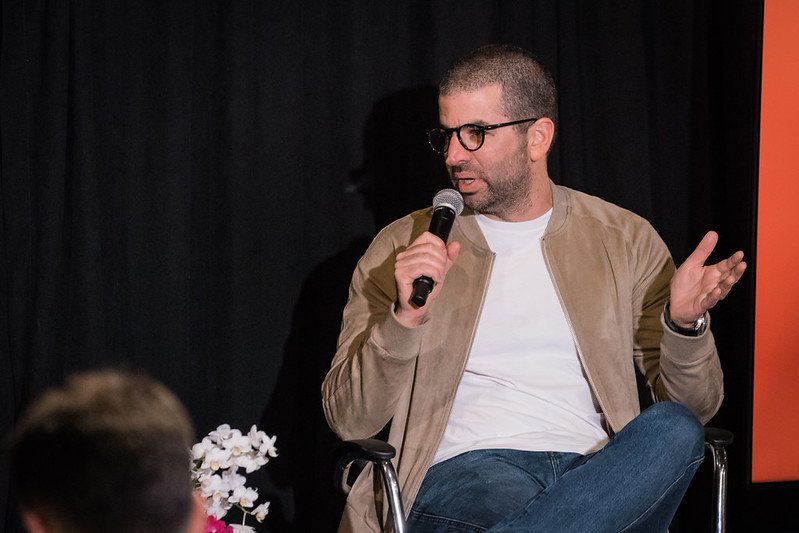
“I think people understand that the real moat in software is gone. You can vibe-code pretty much whatever you want,” Susan remarked during a recent San Francisco industry event. He noted that the rise of advanced AI models capable of generating software tools has devalued traditional SaaS, while physical manufacturing remains a significant, defensible barrier.
“What you cannot do with ‘vibe code’ is manufacture wafers, because you need machines and silicon, and they need clean rooms, and a bunch of other things,” he added.
Scaling the portfolio
The momentum behind Eclipse’s thesis is reflected in the capital flowing into its portfolio. While its companies raised less than $4 billion collectively during the firm’s first eight years, they secured nearly $15 billion in 2025 alone, with an additional $4.5 billion raised in Q1 2026. This growth is anchored by significant late-stage funding rounds for companies where Eclipse acted as the Series A lead:
- Wayve: $1.2 billion
- True Anomaly: $650 million
- Bedrock Robotics: $270 million
- Oxide Computer: $200 million
A confluence of growth factors
While artificial intelligence is a primary catalyst—both as a driver for chip demand and an enabler for robotics—Susan argues that the current environment is bolstered by a rare alignment of five essential forces: capital, customer demand, talent, favorable government policy, and technological maturity.
Beyond private sector enthusiasm, Susan points to U.S. government subsidies and regulatory support as critical pillars for sectors like mining, space, and semiconductors. “This is the first time I believe in America ever, from Henry Ford and Carnegie, those five forces are aligned,” Susan said. “For builders like us, this is the best time to build those companies.”