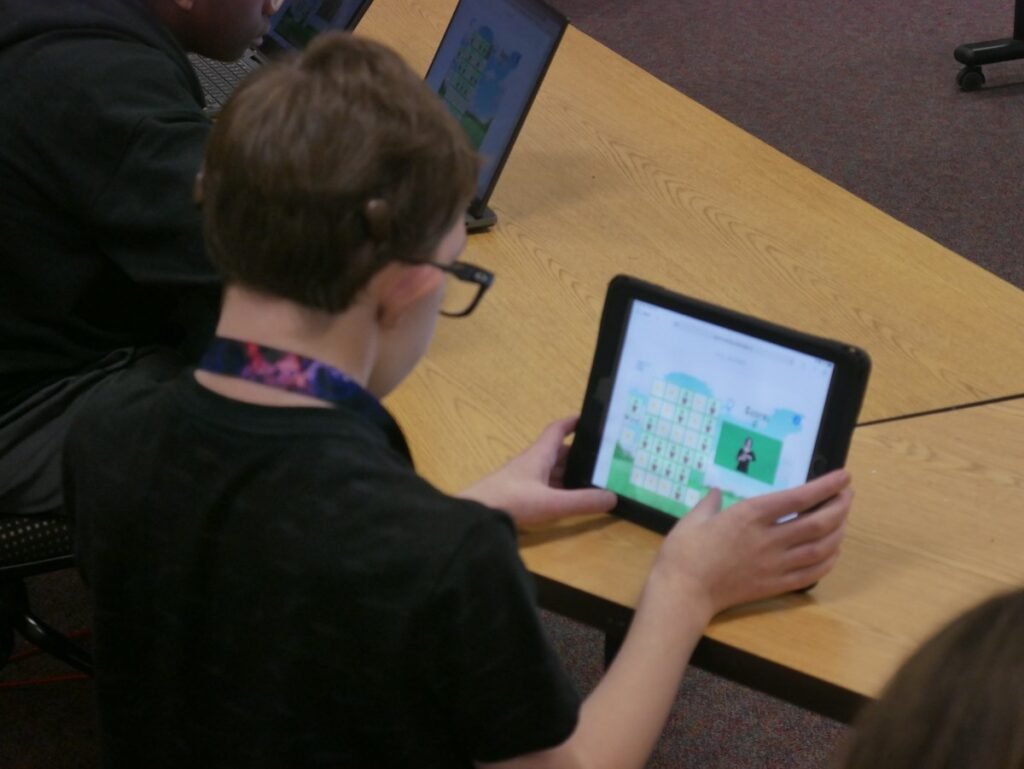
ASL Aspire Bridges STEM Gap for Deaf Students via Gaming
For over a century, literacy rates among deaf high school graduates have remained stagnant at a fourth-grade level, according to data from the National Center for Special Education Research. This systemic challenge is further compounded when students encounter STEM subjects, where standard American Sign Language (ASL) often lacks the necessary technical vocabulary.
ASL Aspire, a startup launched in 2022, is working to dismantle these barriers by collaborating with deaf scientists and mathematicians to standardize STEM terminology in ASL. Their mission is to provide educators with specialized curricula that can be seamlessly integrated into existing classroom instruction.
From University Lab to Classroom
The company was conceived while co-founders Mona Jawad and Ayesha Kazi were students at the University of Illinois, Urbana-Champaign. Jawad, currently pursuing a doctorate in speech and hearing science, identified a critical disconnect during her laboratory work with deaf researchers.
“She saw that the biggest gap within the language was in STEM,” Kazi, the company’s COO, explained. While roughly 10% of the U.S. population is deaf or hard of hearing, these individuals represent only about 0.1% of the STEM workforce. Jawad observed that while academic research on teaching STEM to deaf youth existed, no commercial entity had successfully translated those findings into practical classroom tools.
In 2021, the duo—then 17-year-old freshmen—decided to formalize their initiative. Leveraging university resources, they secured funding for early prototypes and pilot programs, allowing them to test their web application directly within school environments.
Scaling Impact Through Gamification
While the platform initially focused on middle school students, the curriculum is expanding to cover kindergarten through 12th grade. Kazi notes that high schoolers have also benefited from the materials, as many are performing behind their hearing peers due to previous educational limitations.
Key developments for the startup include:
- Pilot Success: In 2023, the team completed pilots with five schools, supporting approximately 200 students, primarily in California.
- Financial Support: The venture has secured $400,000 in research grant funding to support its growth.
- Collaborations: ASL Aspire is partnering with institutions such as the Houston Space Center to expand its content reach.
Navigating the complex sales cycle of school districts remains a primary hurdle. Kazi highlights that the window for school budget approvals is narrow, typically occurring between January and March, requiring precise timing for outreach and value presentation.
Looking ahead, the startup aims to expand its reach to residential schools for the deaf in Fremont and Riverside, California. Beyond STEM, the founders hope to eventually apply their game-based learning methodology across all academic subjects, aiming to provide resources for thousands of students who have been historically underserved by traditional curricula.