
Google Vids adds AI avatar control and Veo 3.1 video generation
Google has expanded the capabilities of its Vids video editing platform, introducing new tools that allow users to direct AI avatars using simple text prompts. The update, announced Thursday, also integrates the Veo 3.1 video-generation model and provides a streamlined path for exporting content directly to YouTube.
The core of the update focuses on granular control over AI characters. Users can now employ natural language commands to dictate how an avatar performs within a scene, such as interacting with specific props, equipment, or products. According to Google, the system is designed to maintain character consistency throughout these dynamic movements.
Customization and Video Generation
Beyond directing actions, the platform allows for deeper character personalization. Users can modify the appearance, clothing, and background settings of their avatars through prompt-based inputs, tailoring the visual identity to the specific theme of their project.
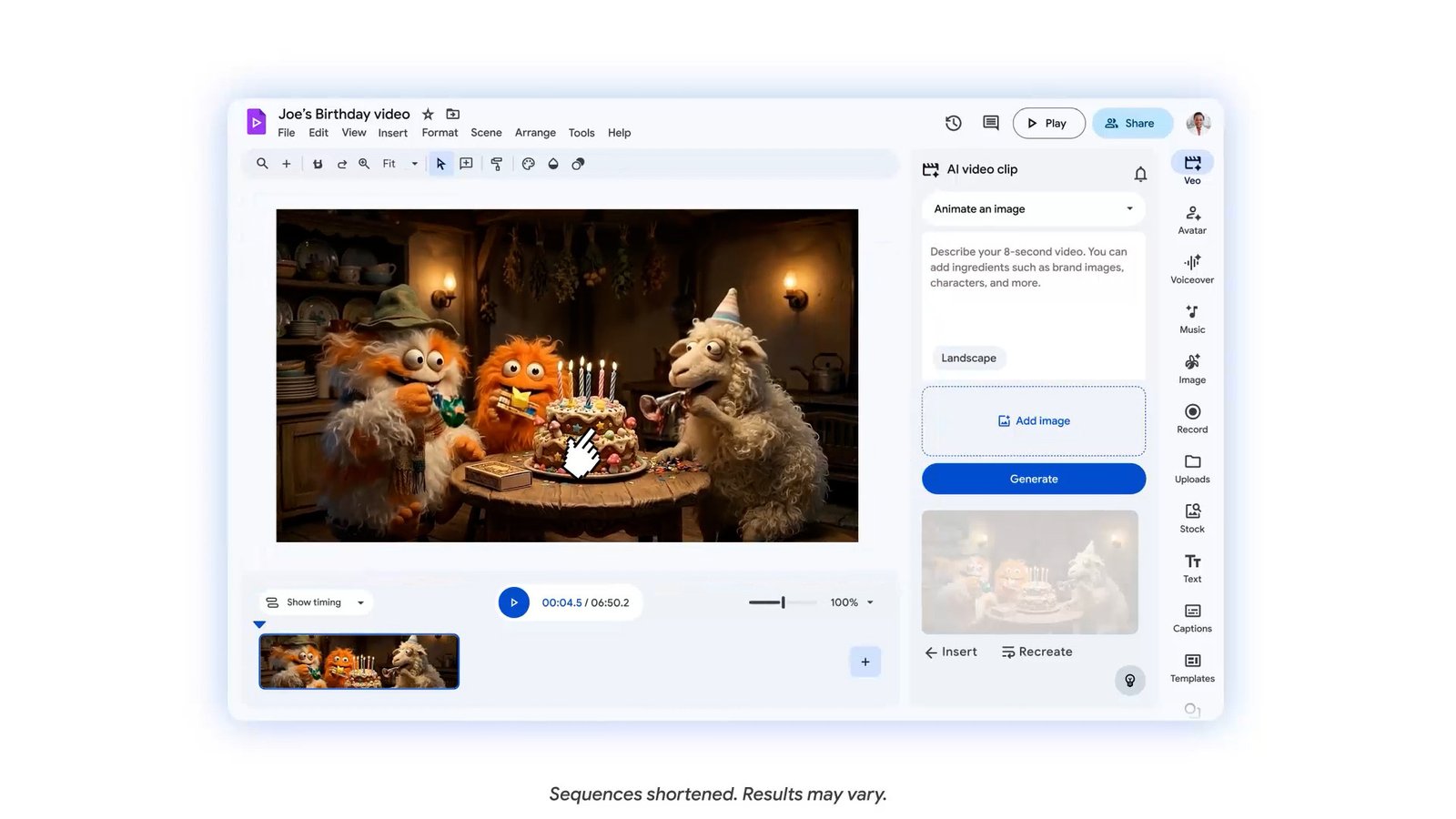
The introduction of the Veo 3.1 model brings significant generative power to the suite, enabling the creation of eight-second video clips directly within the editor. Access tiers for this feature are divided as follows:
- Standard Users: 10 free generations per month.
- Google AI Ultra / Workspace AI Ultra: Up to 1,000 generations per month.
Workflow Enhancements
To improve content distribution, Google has added a direct export feature for YouTube. Videos sent to the platform default to private, allowing creators to review their work before publishing. Additionally, a new Chrome extension for screen recording has been released, enabling users to capture both audio and video input directly into their Vids workspace.
These updates follow a pattern of rapid iteration for the service, which was originally introduced in 2024 for enterprise users. Since then, Google has expanded its feature set to include multilingual support for voice-overs and various cartoon-style avatar options. Vids continues to compete in a crowded market that includes tools from companies such as HeyGen, Synthesia, D-ID, and Lemon Slice.