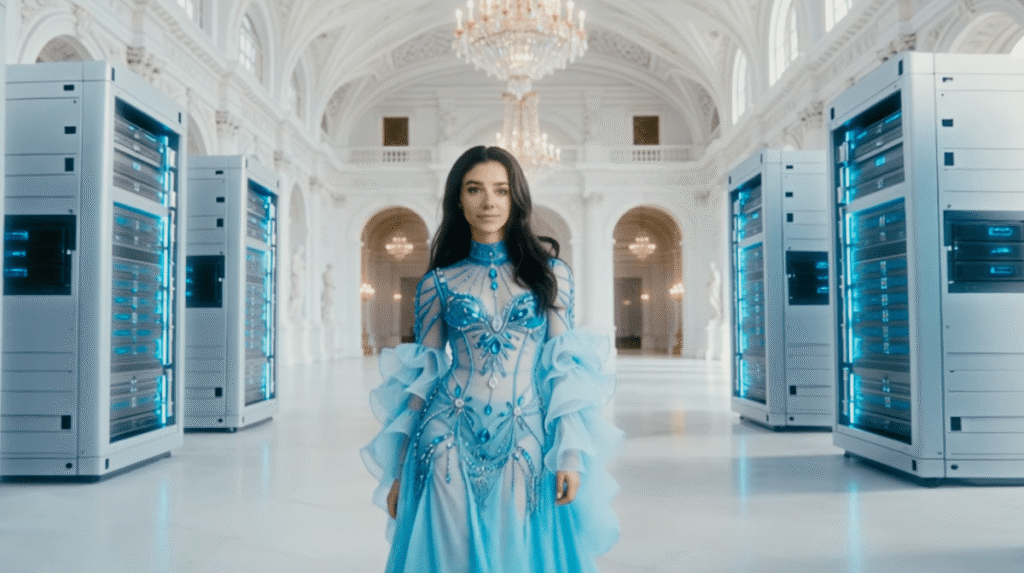
AI ‘Actor’ Tilly Norwood Releases Song Critics Call Worst Ever

The production company Particle6 has expanded the reach of its controversial AI-generated “actor” Tilly Norwood, transitioning the digital persona from screen appearances to the music industry. The debut of the song and music video “Take the Lead” has arrived to widespread derision, marking a new low in the ongoing tension between synthetic media and the entertainment sector.
Hollywood’s resistance to the project began last fall upon Norwood’s initial introduction. Golden Globe winner Emily Blunt expressed the industry’s collective apprehension in an interview with Variety, stating, “Good Lord, we’re screwed. Come on, agencies, don’t do that. Please stop.”
A Controversial Musical Debut
Despite the pushback, Particle6 moved forward with a production involving 18 contributors—ranging from prompters to video editors. The resulting track, “Take the Lead,” positions Norwood as a misunderstood figure fighting for legitimacy. In the lyrics, the character claims, “They say it’s not real, that it’s fake. But I am still human, make no mistake.”
The song’s thematic focus centers on a struggle that, by definition, no human can share: the plight of an AI persona feeling disregarded for its lack of biological existence. The composition, which critics have compared to a derivative take on Sara Bareilles, includes an anthem-like chorus directed at other AI actors:
- “Actors, it’s time to take the lead”
- “Create the future, plant the seed”
- “AI’s not the enemy, it’s the key”
Visually, the video depicts Norwood walking through a data center before transitioning to a stage performance in front of a stadium of synthetic, cheering spectators. The outro reinforces the message as a rallying cry for “AI Actors” to “create our fate.”
The Industry Stance on Synthetic Performers
The release of “Take the Lead” highlights the widening chasm between tech developers and human performers. SAG-AFTRA, the union representing actors, issued a formal statement last year criticizing the very premise of Tilly Norwood. The union described the character as a product of computer programs trained on the work of professional performers—often without consent or compensation.
“It has no life experience to draw from, no emotion and, from what we’ve seen, audiences aren’t interested in watching computer-generated content untethered from the human experience,” the union noted. They emphasized that such projects jeopardize livelihoods by using stolen performances to devalue human artistry.
The frustration directed at Norwood mirrors historical critiques of derivative art. Much like the 2006 backlash against the band Jet—which prompted a famous, cynical response from Pitchfork—the current wave of AI-generated content is being criticized for being “knuckle-dragging and Xeroxed.” However, the stakes for performers today remain significantly higher, as these synthetic models rely entirely on the ingestion of human creative data to function.