AI in Filmmaking: A Tool for Vision or Industry Death?
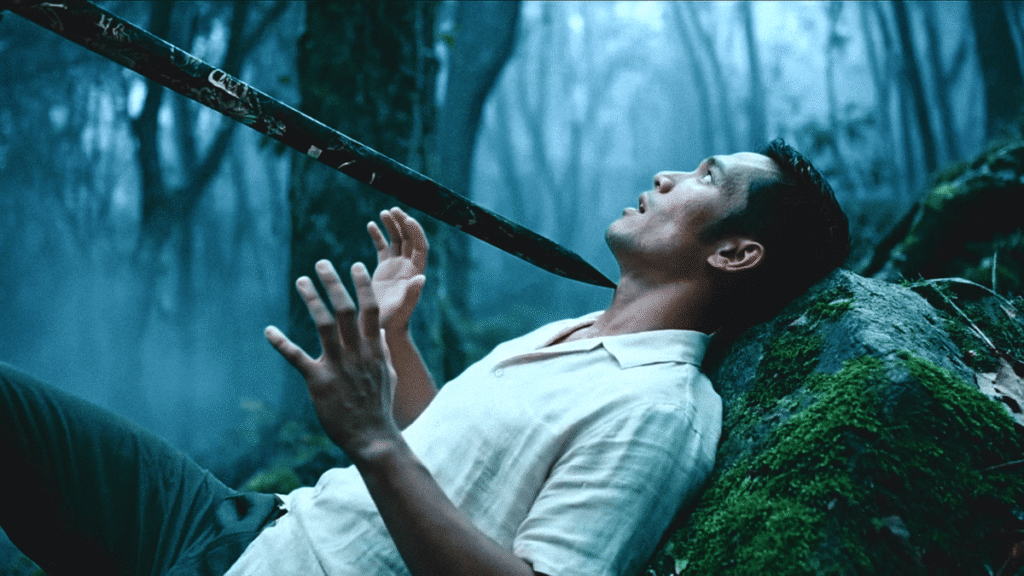
A Filipino man traverses his childhood backyard in rural Hawaii, his path marked by the crunch of grass and the ambient sounds of tropical birds. He stops at a shrine beneath a starfruit tree to examine an old, framed portrait. A sudden gust of wind disrupts the scene, leading to a fall that transports him into a mist-covered forest, where a mysterious woman in a clay mask threatens him with a sword. She speaks in Ilocano, a language native to the northern Philippines and common among Hawaii’s Filipino community.
This sequence opens Murmuray, a short film by independent director Brad Tangonan. While the visual language—marked by tactile nature shots and a dreamlike, desaturated aesthetic—aligns with his previous work, the production process marks a departure: the film was crafted using artificial intelligence.
Tangonan is part of a 10-person cohort from Google’s Flow Sessions, a five-week initiative providing creators with early access to tools like Gemini, the image generator Nano Banana Pro, and the video model Veo. The program aimed to explore how these technologies could translate abstract concepts into visual narratives.
Beyond the “AI Slop” Narrative
The rise of AI video generation—backed by billions in venture capital from firms and tech giants like Luma AI, Runway, and OpenAI—has triggered a polarizing debate. Critics, including prominent figures like Guillermo del Toro and James Cameron, have voiced deep skepticism. Cameron recently described the concept of prompting actors and emotions as “horrifying,” suggesting that AI merely synthesizes a “blended average” of existing human work.
However, the filmmakers involved in the Google cohort argue that the technology functions as a facilitator rather than a replacement. For Tangonan, the AI was a means to achieve specific visual effects, such as the surreal forest flight sequence, which would have been financially out of reach for a typical short film budget. “I’m still making all the creative decisions,” Tangonan says. “If you have a voice and a creative perspective, you get something different.”
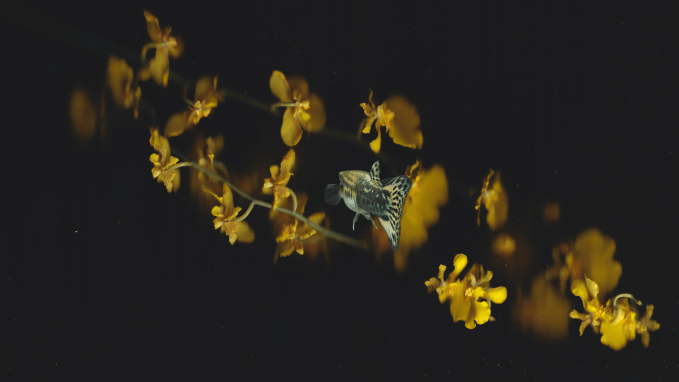
Keenan MacWilliam, another participant, took a highly deliberate approach for her film Mimesis. She utilized her own library of scanned flora and fauna as the dataset for her visuals, ensuring the work remained an extension of her personal style rather than a generic aggregate of other artists’ content. “I made a choice to avoid using AI for anything that I could have shot with a camera,” she notes.
The Efficiency Dilemma
The integration of AI comes at a time when the film industry is grappling with shrinking budgets and a pivot to streaming that has largely abandoned mid-budget, original storytelling. While AI can lower the barriers to entry, it also introduces the risk of “efficiency-crazed” studios prioritizing cost-cutting over artistic quality.
There is also the challenge of isolation. Filmmaking is inherently collaborative, yet these new tools often empower a “one-man band” dynamic. Hal Watmough, who directed You’ve Been Here Before, warns against this trend. “It should be a collaborative process because the more people that are involved, the more accessible it is by everyone,” he explains.
Defining the Ethical Boundaries
Beyond creative concerns, ethical hurdles remain. These include questions regarding the training data used by major models and the significant environmental energy costs associated with video synthesis.
Despite the backlash from peers, filmmakers like Tangonan believe that avoiding the technology is a losing strategy. “If we don’t [engage with it], then it’s going to become something we don’t recognize,” Watmough adds. The consensus among these creators is that if artists do not take the lead in defining how these tools are used, the industry’s corporate entities will do it for them, likely favoring profit over the integrity of the craft.