Epic Games Says Apple’s iOS 18.6 Update Boosts Installs
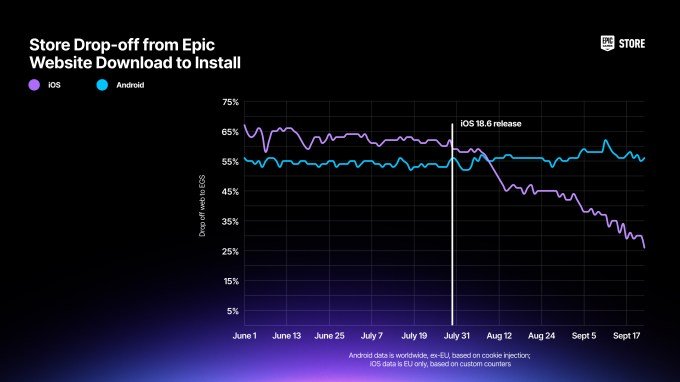
The installation of third-party app stores on iPhones has become significantly more efficient following the release of iOS 18.6. Epic Games, a vocal critic of Apple’s distribution policies, reports that the revised workflow has led to a 60% reduction in user abandonment rates.
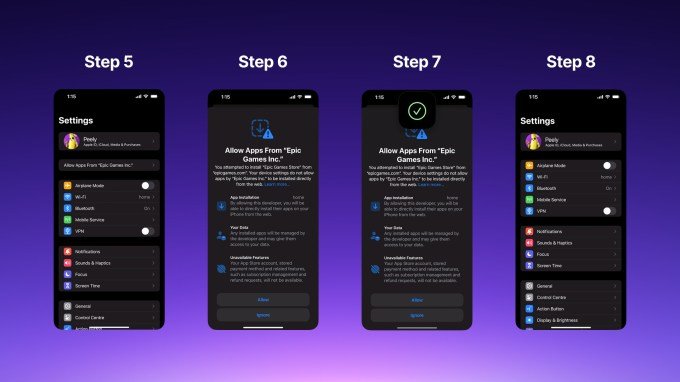
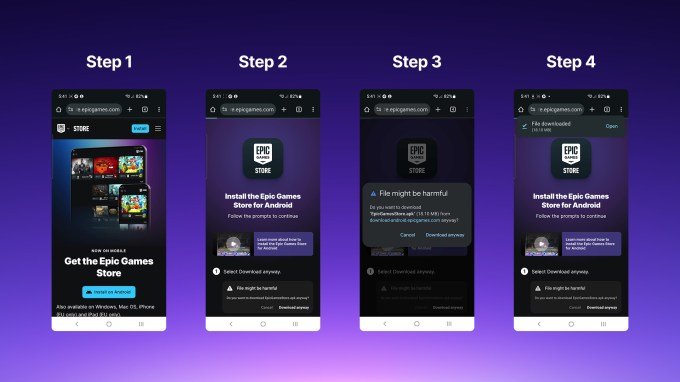
Before the update, the process for downloading alternative marketplaces—mandated by the European Union’s Digital Markets Act (DMA)—was notoriously complex. Users were met with multiple warning screens, often described as “scare screens,” which discouraged them from completing the installation. These friction points were a primary source of frustration for developers, with Epic Games noting that 65% of its potential users previously abandoned the installation process.
Since the rollout of iOS 18.6 in July, that figure has plummeted to 25%. Epic Games stated that this conversion rate is now much more comparable to the experience of users installing its store on Windows or macOS.
A Simplified User Journey
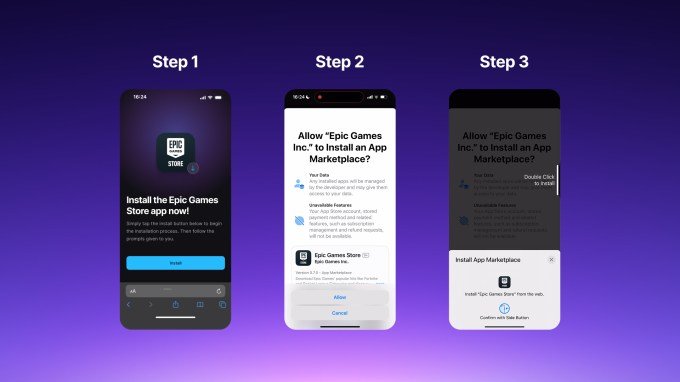
The updated flow replaces the previous multi-step warning system with a single screen. This interface clarifies that:
- Users may lose access to certain features, such as App Store-managed subscriptions.
- The developer of the alternative marketplace assumes direct responsibility for user data handling.
Despite these improvements, tensions between the two companies persist. Epic Games continues to challenge Apple regarding the “core technology fee,” strict notarization requirements, and other policies that the developer argues create unnecessary hurdles for third-party distribution.
Broader Regulatory Battles
The dispute echoes long-standing arguments from previous legal battles. During a past lawsuit, Apple SVP of Software Craig Federighi famously warned that allowing iOS the same level of openness as macOS could lead to a surge in malware. Epic Games maintains that Apple’s security concerns are often used as a pretext to preserve its ecosystem dominance.
Apple is not the only target of Epic’s scrutiny. The company is simultaneously pushing back against Google, alleging that the search giant employs similar “scare tactics” and complex installation flows on Android to deter users from third-party alternatives. This follows a U.S. court ruling that ordered Google to open its Play Store to competition, a decision the company failed to overturn on appeal this past July.