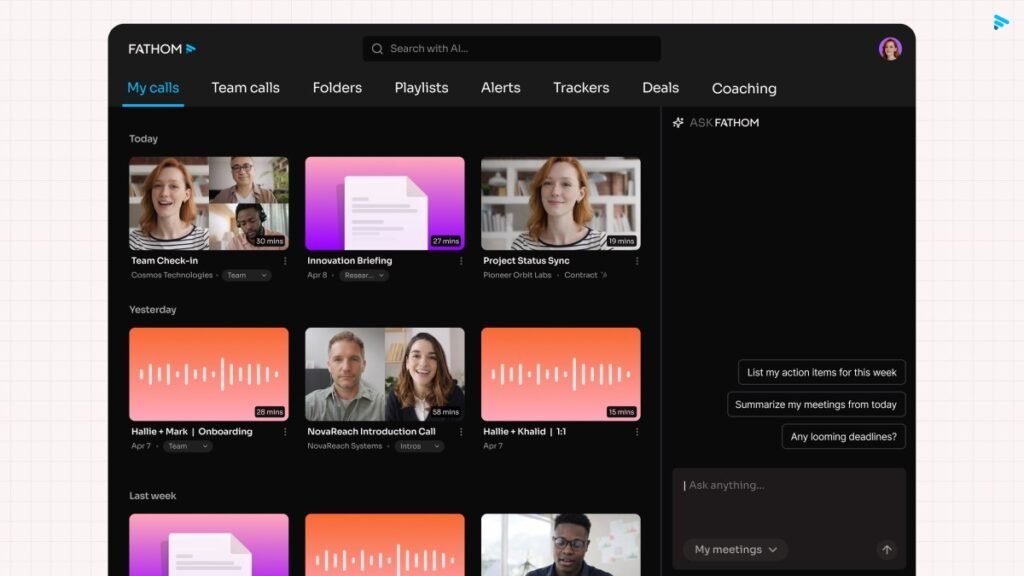
Fathom launches bot-less meeting mode to tackle clutter
Modern video calls have become increasingly cluttered as countless AI note-taking assistants join conversations to transcribe and summarize discussions. To combat this issue, the startup Fathom has launched a new update that allows its platform to transcribe calls without requiring a dedicated bot to enter the meeting room.
While the market for desktop-based transcription tools—including options like Granola, Talat, Notion, and ChatGPT—is already active, Fathom aims to differentiate itself by offering video recording capabilities and flexible transcription modes. The company emphasizes that recent advancements in AI models over the past six months made this transition to a bot-less client possible.
Focus on speaker accuracy
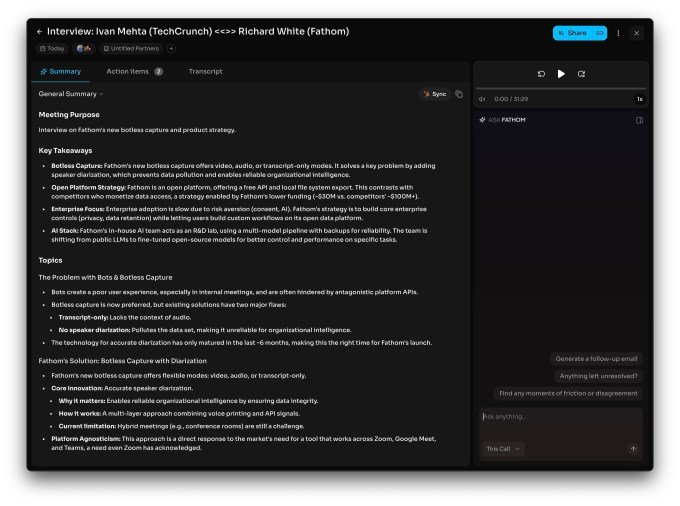
A primary concern for Fathom is the quality of speaker diarization—the ability of the AI to distinguish between different participants in a conversation. CEO Richard White noted that many existing bot-less solutions struggle to attribute dialogue correctly, which complicates future searches through meeting archives.
“A lot of these bot-less tools don’t indicate who said what in their captured transcript,” White told TechCrunch. He pointed out that users often encounter frustration when trying to verify specific statements from meetings held months prior due to poor attribution.
Expanding utility
Beyond the new recording mode, Fathom is introducing several features aimed at increasing utility for business users:
- AI Database Querying: Users can now query their meeting history, allowing the AI to synthesize broader context across multiple sessions.
- MCP Support: The company is releasing a Model Context Protocol (MCP) server, enabling users to integrate meeting data directly into external AI tools.
- Future Mobile Plans: Fathom is currently developing an iOS application designed to handle the recording of in-person meetings.
The move toward open data integration via MCP arrives as competitors face scrutiny over closed ecosystems. For instance, Granola recently drew criticism from users after updates to its local database disrupted established AI workflows that relied on external transcript access.