Google Pixel 8 Pro Review: A Camera-First Evolution
The Google Pixel 8 Pro is, above all else, a camera upgrade. For users who do not prioritize mobile photography or video production, there is little incentive to move from the Pixel 7 Pro to this latest iteration. While the device is a solid flagship, it highlights a broader industry trend: smartphone innovation has largely devolved into a “war of inches,” where manufacturers struggle to deliver transformative leaps beyond incremental improvements.
The AI Photography Engine
Google’s identity as both a software and AI powerhouse remains the driving force behind the Pixel line. Since the inception of the series, the company has banked on the idea that algorithmic processing can solve the majority of photographic challenges, from low-light performance to uneven lighting. While early models focused on single-sensor solutions, Google has successfully pivoted to multi-camera arrays that balance hardware capability with computational intelligence.
New features like “Best Take” exemplify this focus. The tool allows users to swap facial expressions across multiple photos to ensure everyone in a group shot is smiling or has their eyes open. While the effect can approach the “uncanny valley,” the blending technology is undeniably impressive. Complementing this is the upgraded “Magic Editor,” which provides sophisticated tools for resizing and repositioning subjects within a frame.
New Hardware: Display and Thermometer
Beyond the camera, Google introduced two marquee hardware changes:
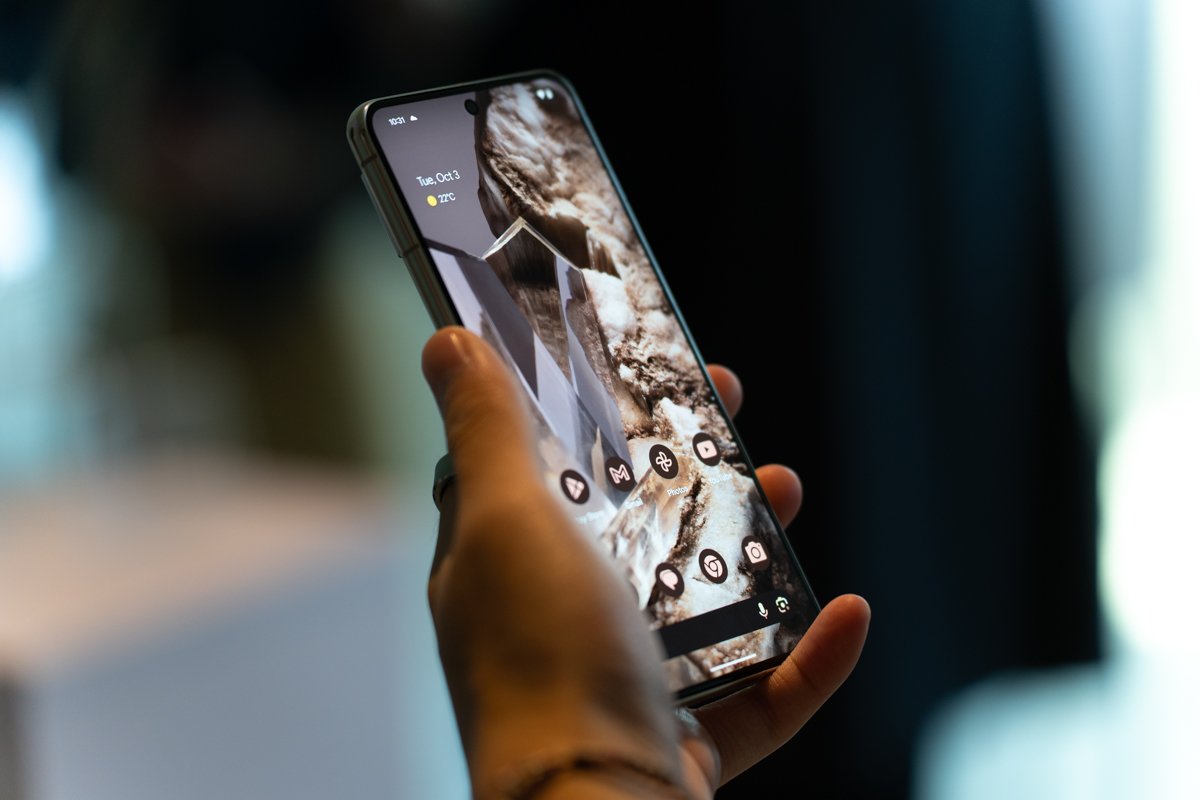
- Actua Display: The screen now hits a peak brightness of 2,400 nits, a significant jump from the 1,500 nits on the 7 Pro, effectively outperforming competitors like the iPhone 15 Pro Max (2,000 nits) and the Samsung Galaxy S23 Ultra (1,750 nits).
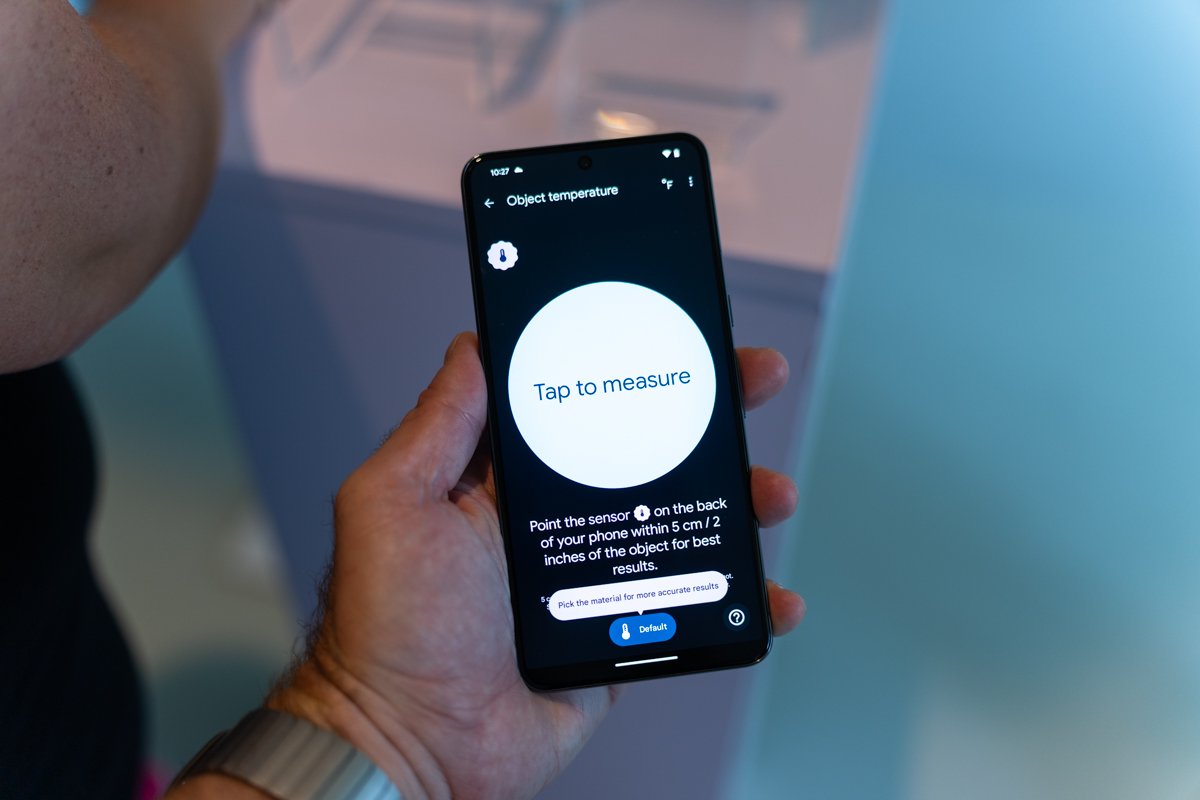
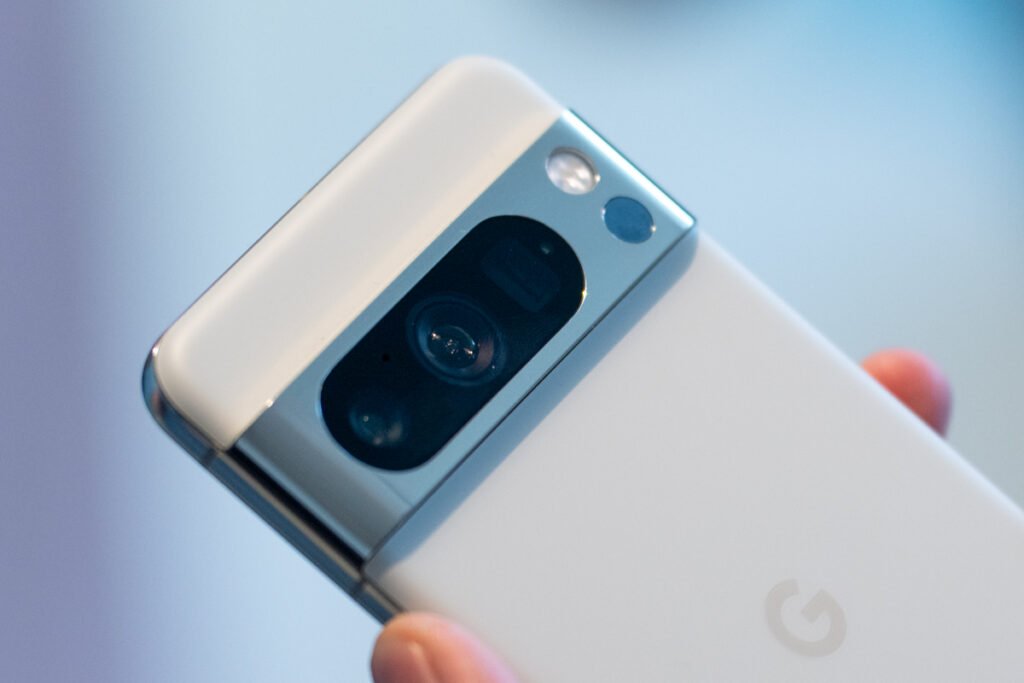
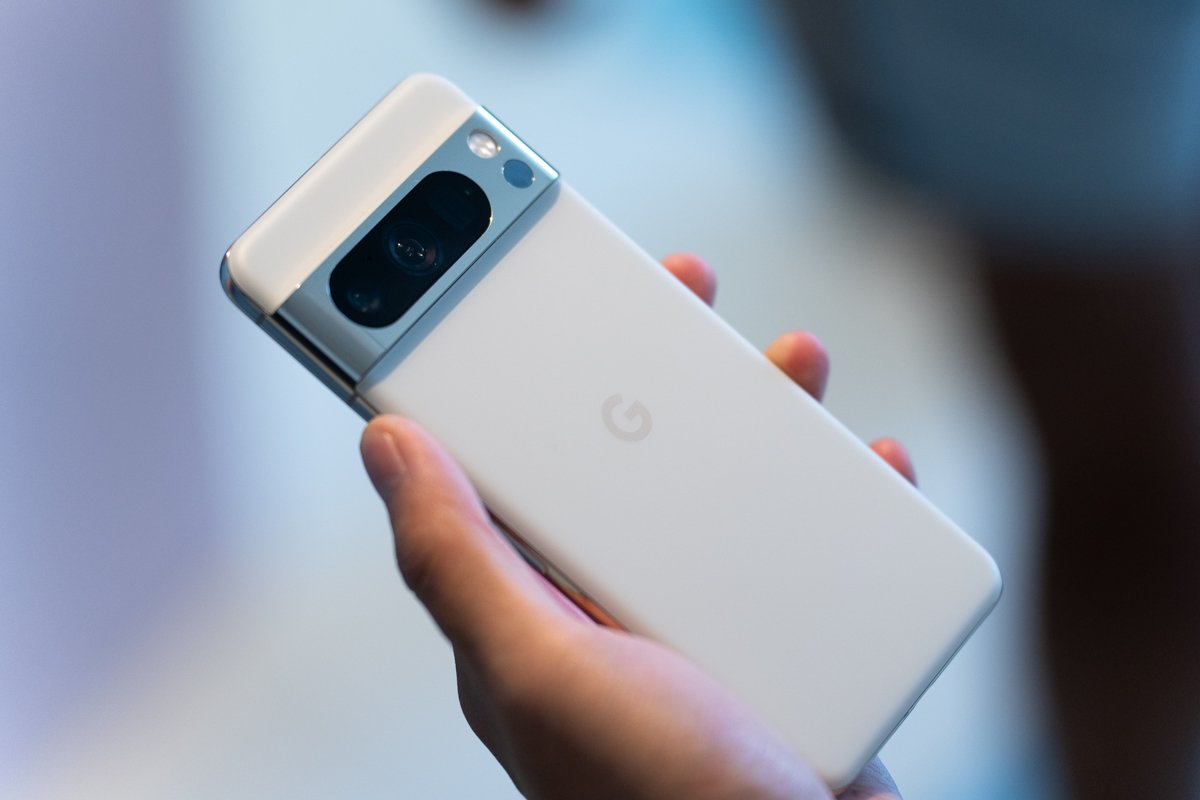
- Temperature Sensor: Located on the camera bar, this sensor is designed to measure surface temperatures. It supports 11 material settings, including ceramic/glass and food. However, it is explicitly not intended for measuring human body temperature.
Market Positioning and Pricing
The transition to the Tensor G3 chip offers a measurable performance boost over the G2, though it still lags behind Qualcomm’s Snapdragon 8 Gen 2 in raw numbers. Ultimately, the chip’s value lies in the AI-driven photography features it enables rather than benchmark dominance.
However, the $999 price tag marks a $100 increase over the previous model, placing the Pixel 8 Pro firmly in the “premium flagship” category. This shift may challenge Google’s reputation as a budget-friendly alternative. To mitigate this, Google is offering seven years of software updates, providing significant long-term value for users who intend to keep their devices for the better part of a decade.