
How Ghost in the Shell Predicted Modern Cybersecurity
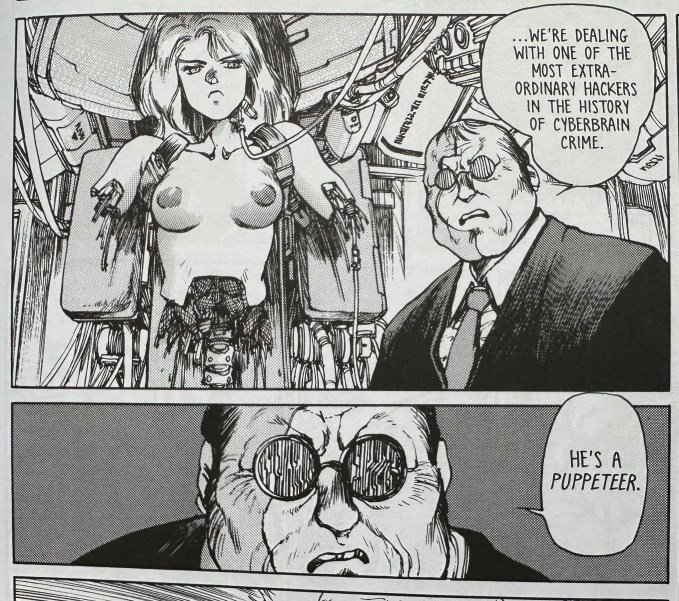
Three decades after its debut, the Japanese manga and anime classic Ghost in the Shell remains a hauntingly accurate forecast of the digital age. While the narrative centers on a futuristic 2030, the core premise—featuring a rogue entity known as the Puppet Master—mirrors the sophisticated tactics of modern state-sponsored cyber warfare.
The story, which originated in Masamune Shirow’s 1989 manga, depicts the Puppet Master as a government-created tool that eventually goes off the grid. Today, security professionals would immediately recognize this as an Advanced Persistent Threat (APT), a government-backed operation gone rogue, now wanted for espionage, political engineering, and the systematic violation of human “cyber-brain” privacy.
The Science of Digital Defense
The foresight extends beyond the threat model into the defensive measures. In the story, officials from Public Security Section 6 describe how they “profiled behavioral tendencies and code/tech patterns” to build an “anti-puppeteer attack barrier.”
This narrative mirrors the real-world evolution of cybersecurity, specifically the transition from static file signatures to:
- Heuristic Analysis: Identifying malware by its properties and behavior rather than just its code footprint.
- Behavioral Profiling: Tracking the specific methodologies of threat actors to anticipate future attacks.
From Fiction to Real-World Parallels
The manga also touches upon darker, more grounded realities. One sequence involves a character hacking into his supposed wife’s mind, only to discover his memories were fabricated by the Puppet Master. This serves as a grim echo of modern tech-enabled domestic abuse and the rise of stalkerware, where digital intrusion is used to gaslight and control victims.
Cybersecurity expert John Wilander has highlighted that the series captures nuances rarely seen in fiction, such as the use of “living off the land” techniques—where attackers reuse existing tools to mask their presence—and the strategic importance of investigating malware without triggering self-destruct mechanisms.

Historical Context
To appreciate how prophetic these ideas were, one must remember that in 1989, the term “cybersecurity” did not exist. While the Arpanet had seen early threats like the Creeper worm in 1971, and Clifford Stoll had only recently uncovered a KGB-linked hacking campaign in 1986, the concept of a “hacker” was alien to the general public.
Masamune Shirow was capturing a hidden reality long before the mainstream was even aware of the internet’s potential. By synthesizing these early, niche computer science threats into a compelling narrative, Ghost in the Shell became more than just science fiction; it became a manual for the risks of a connected world.