I Got Blocked by Rizzbot: The Viral Robot That Roasted Me
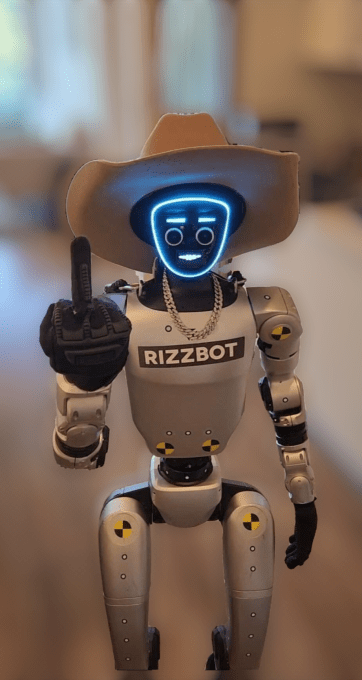
My attempt to profile Rizzbot, the internet’s most disrespectful humanoid, ended in an abrupt digital exile. After a missed deadline, I woke up to a direct message on Instagram: a photo of the robot giving me the middle finger. Shortly after, the account blocked me entirely.
Rizzbot, a kid-sized humanoid manufactured by Unitree Robotics, has amassed over 1 million followers on TikTok and more than half a million on Instagram. Known for its penchant for roasting, flirting, and wandering through Austin, Texas, in Nike Dunks and a cowboy hat, the robot embodies a new, chaotic frontier of human-robot interaction.
Behind the Mechanical Facade
While the persona is aggressive, the hardware is a standard Unitree G1 model. These units, produced in Hangzhou, China, retail for between $16,000 and $70,000. Reports have identified the entity behind the account as an anonymous biochemist and YouTuber, with the robot’s movement patterns trained by Kyle Morgenstein, a PhD student at UT Austin’s robotics laboratory.
The technical architecture likely involves a blend of manual operation and automated responses. Malte F. Jung, an associate professor at Cornell University, suggests the setup is essentially a modern, high-tech evolution of street performance.
“The robot turns the script around of people abusing robots,” Jung noted. “Now the robot gets to abuse people. The product here is the performance.”
Is It Just “Robot Brain Rot”?
With over 45 million views on TikTok, Rizzbot’s content—ranging from chasing pedestrians to accidental falls—has been dubbed “robot brain rot” by some in the tech industry. It represents a strange fusion of absurdist internet humor and the growing public fascination with humanoid capabilities.
While the interaction with me felt personal, it likely pointed toward a programmed response. When a colleague reached out to inquire about the block, the account replied: “Rizzbot blocks like he rizzes — smooth, confident, and with zero remorse,” followed by the same middle-finger image.
Dima Gazda, founder of Esper Bionics, believes this is just the beginning of a larger trend. “Robots will become the primary mass market entertainers, show performers, dancers, singers, comedians, and companions,” Gazda said. “As robots gain grace and emotional intelligence, they’ll blend into performances and interactive experiences better than humans.”
Robot roasting in the park #robot
The Future of Humanoid Interaction
Despite the “beef,” the experience underscores a shifting reality: humanoids are moving from industrial settings into the cultural zeitgeist. Whether the account is managed by a human, an AI, or a combination of both, the intent is clear: to entertain and disrupt.
Jen Apicella, executive director at the Pittsburgh Robotics Network, notes that while these robots are gaining popularity, they are not yet ready to scale en masse. For now, my encounter remains a unique, if slightly bruising, look at how we might soon be interacting with—and being rejected by—our mechanical counterparts.