
Ian Bogost: Why We Must Reclaim Life From Convenience
For years, Silicon Valley has operated on a singular, relentless premise: if a human action can be automated, smoothed over, or rendered invisible, it should be. However, according to writer and academic Ian Bogost, this obsessive pursuit of efficiency has come at a steep price. In his upcoming book, “The Small Stuff: How to Lead a More Gratifying Life,” Bogost posits that we have unwittingly traded our connection to the physical world for the sake of convenience.
Bogost’s argument is rooted in the concept of “dematerialization.” He describes this not merely as a technological phenomenon, but as a broader shift involving bureaucracy, economic policy, and regulatory systems that have collectively stripped the texture from our daily experiences. The result is a profound disconnection from the sensory world we inhabit.
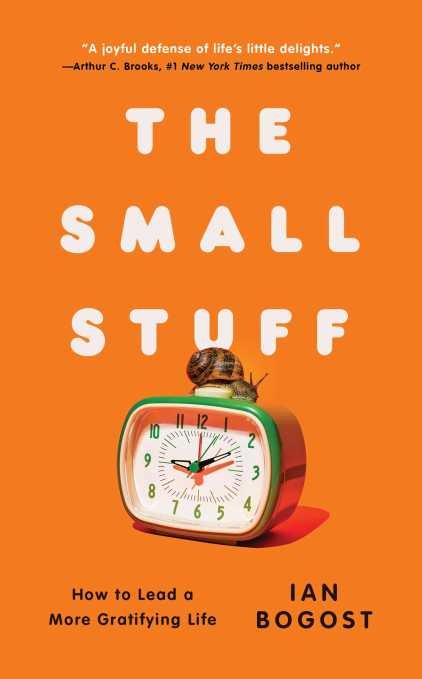
The Cost of Seamless Living
To illustrate how deeply this has permeated modern life, Bogost points to the mundane experience of the airport restroom. Modern fixtures—automatic toilets, touchless sinks, and soap dispensers—are designed to eliminate human interaction with the environment. While these tools aim to make life easier, they often remove the physical agency that once defined our relationship with our surroundings.
“It’s the idea that we’ve become disconnected from the sensory world, and the reason that happened is what you might call convenience technologies,” Bogost explains. He notes that while these advancements have improved our lives in many ways, they have created a “frog-boiling” effect: we have slowly accepted a world where our sensory contact is increasingly mediated by machines.
Beyond the Tech Critique
Unlike many contemporary critics who focus on “enshittification” or the systemic failures of capitalism, Bogost expresses a weariness with the cycle of constant outrage. He argues that waiting for broad societal or economic reform is an unfair burden to place on individuals who simply want to lead more fulfilling lives.
Instead, the book offers a shift in perspective:
- Experience over Outcome: We have become hyper-focused on the results of our actions, neglecting the importance of the process itself.
- The Value of Friction: While we shouldn’t seek out unnecessary obstacles, we benefit from the sensory engagement that comes with performing tasks manually.
- Nostalgia as a Compass: While living in the past is unproductive, recognizing the value of older, tactile experiences can help us better appreciate our present reality.
Re-evaluating Silicon Valley’s Goals
Bogost suggests that the tech industry has lost its way by viewing human embodiment as a nuisance to be solved. He traces this back to the transition from computers as cultural tools in the 1970s—where human factors were central to design—to the current era of optimization. Today, he argues, developers often view the “experience” of doing something as a problem to be automated away, rather than a vital part of being alive.
“The experience of using products and services matters, not just the outcomes that they provide,” says Bogost. “We are not able to exit our bodies. And yet, there’s still this weird sense in the Valley that that embodied human experience is not needed.”
Ultimately, Bogost’s work is a call to find gratification in the “small stuff”—the ordinary, sensory interactions that define our existence. By reclaiming these moments, he believes we can recover a sense of meaning that no amount of digital efficiency can replace.