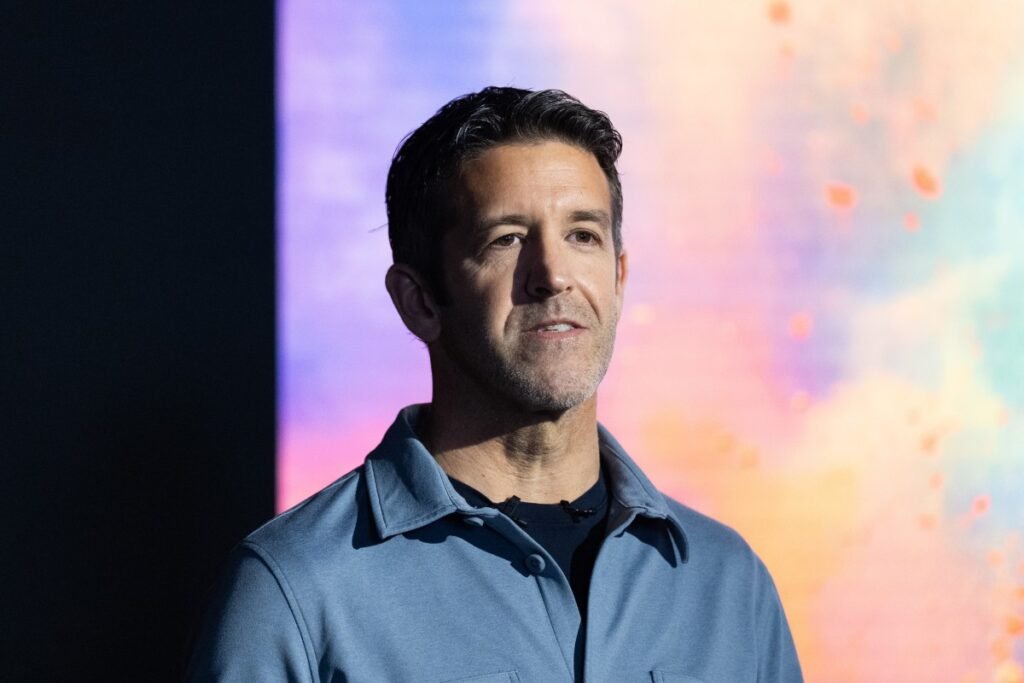
John Ternus to Lead Apple: A New Era of AI Hardware
Apple is entering a major leadership transition as John Ternus prepares to take the helm as CEO later this year, succeeding Tim Cook. This change at the top marks a pivotal shift for the $4 trillion technology giant, moving from the service-oriented expansion of the Cook era toward a renewed focus on hardware innovation in the age of artificial intelligence.
Ternus, who joined Apple in 2001, has spent his entire tenure within the company’s hardware engineering ranks. His track record includes critical contributions to flagship products such as the Apple Watch, AirPods, and the Vision Pro. His promotion signals that Apple intends to anchor its competitive strategy in physical devices rather than solely chasing foundational AI model development.
Hardware with AI at the center
The incoming CEO’s vision appears centered on integrating AI into the user’s immediate environment. Industry reports suggest that Apple is exploring various form factors, including smart glasses, camera-equipped pendants, and AI-enabled AirPods, all designed to function as extensions of the iPhone with Siri serving as the core interface.

Ternus is also expected to accelerate projects that have previously lingered in development. Among these is the highly anticipated foldable iPhone, which is currently slated for a September launch under his oversight. Furthermore, his background suggests a deeper push into robotics. During his college years, Ternus developed a mechanical feeding arm for quadriplegic patients, a testament to his long-standing interest in the field as detailed by the New York Times.
Current internal explorations in robotics include:
- Tabletop devices featuring robotic arms and displays for interactive smart assistance.
- Mobile robots designed to follow users or serve as portable FaceTime screens.
- Long-term research into humanoid robotics.
Beyond product design, Ternus will inherit significant logistical hurdles. Apple continues to navigate a volatile global landscape defined by memory chip shortages and shifting tariff policies under the Trump administration. To mitigate risks associated with its historical reliance on Chinese manufacturing—where approximately 80% of iPhones were once produced—the company has accelerated its shift toward India. Recent data from Bloomberg indicates that India now accounts for roughly 25% of total iPhone production.
While Tim Cook’s tenure is defined by his success in scaling the company’s services business to historic levels of profitability, the transition to Ternus suggests a deliberate pivot. The company is now positioning itself to define the next generation of personal technology through devices that blend physical engineering with advanced AI capabilities.