Meta Quest 3 Introduces Augments for Mixed Reality Spaces
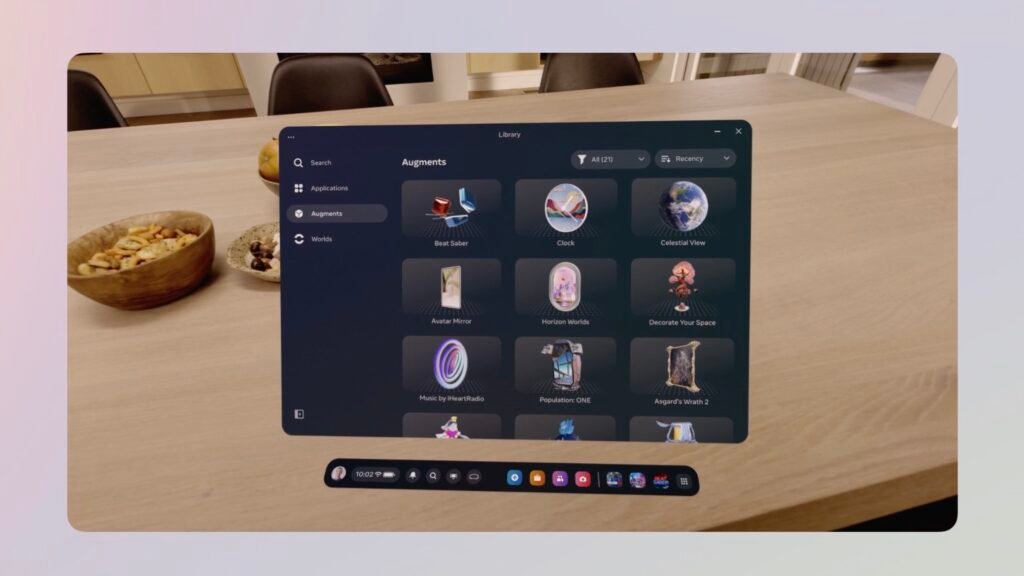
Meta is expanding the capabilities of its mixed-reality ecosystem with the introduction of “augments” for the upcoming Quest 3 headset. These digital widgets and objects are designed to be anchored within a user’s physical environment, allowing for a persistent blend of virtual elements and real-world spaces.
During the company’s annual Connect conference on Wednesday, Meta’s chief technology officer, Andrew Bosworth, detailed how these digital additions function. “Next year, you’ll be able to customize your space with a library of augments that interact with the world in ways that physical objects can’t,” Bosworth stated, noting that the library will support both 2D displays and dynamic 3D objects.
Spatial Persistence and Customization
The system is built to remember where users place their digital items. According to Bosworth, “You can size, place and spatially anchor augments, so every time you put on your headset, they’re right where you left them.”
The range of possible augments is broad, catering to various user interests:
- Gamers can showcase digital trophies on physical shelves.
- Music enthusiasts can utilize iHeartRadio widgets.
- Fitness users can place interactive bobbleheads of their trainers for motivation.
- General utility items include digital clocks or avatar mirrors.
Advanced Environmental Mapping
The Quest 3 relies on improved spatial computing to integrate these elements. Upon putting on the headset, the device performs an automatic scan of the user’s surroundings. “Quest 3 automatically maps your space and understands elements like walls, furniture and objects,” Bosworth explained. This mapping capability allows for more fluid interactions, such as game elements appearing to land on actual furniture, like a coffee table.
This technical shift also moves away from the traditional virtual boundary system. Because the device understands the physical layout of a room, users no longer need to manually designate play areas to ensure safety while moving.

Competitive Positioning
Meta is positioning the Quest 3 as a versatile device capable of handling both virtual and augmented reality, aiming to differentiate itself from competitors like Apple’s Vision Pro. Bosworth emphasized that the headset “isn’t one or the other. It can do both.”
To support this, the company has focused on reducing latency and improving color accuracy in the video passthrough. Users can shift between different modes, such as moving from an immersive private theater experience to a large screen pinned to a living room wall, by simply double-tapping the side of the headset.
While the feature set is extensive, questions remain regarding social functionality. It is currently unclear if these personalized digital spaces can be shared or viewed by other users wearing their own headsets, as Meta did not provide clarification on multi-user visibility for augments.