
The ‘Slow Tech’ Movement: Why Users Are Ditching Screens
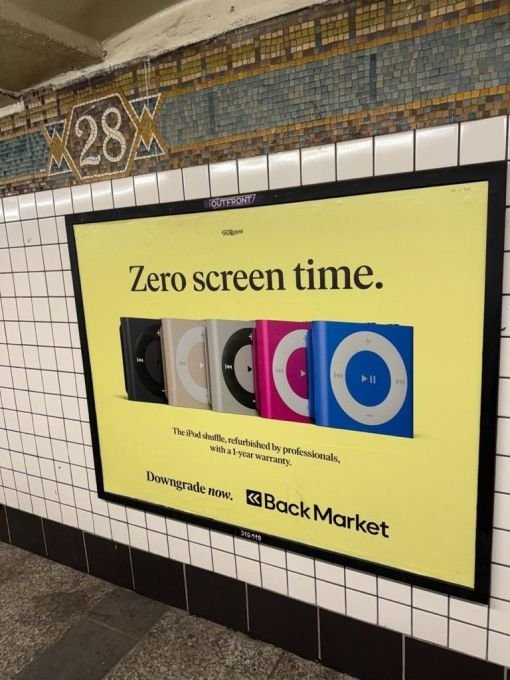
Tony Fadell, the architect behind the original iPod, recently found himself staring at an advertisement in a New York City subway station that felt like a glimpse into a parallel timeline. The poster promoted the iPod Shuffle—a device he helped create over two decades ago—centered on a singular, provocative promise: “zero screen time.”
For a designer who helped usher in the era of the pocket-sized digital library, witnessing a product from the early 2000s marketed as a modern solution to digital fatigue was surreal. “For somebody like me who knows that thing intimately, it’s like seeing your kid’s picture,” Fadell told TechCrunch.
The Rise of “Slow Tech”
The campaign, launched by the refurbished electronics marketplace Back Market, taps into a growing sentiment: the exhaustion caused by constant connectivity. Joy Howard, CMO of Back Market, suggests that consumers are increasingly overwhelmed by the pressure to optimize every moment of their lives through algorithms and apps.
This movement, which Howard labels “slowtech,” isn’t just about nostalgia for retro hardware like digital cameras or CDs. It is a deliberate shift toward creating friction. While modern tech is designed to remove hurdles, users are beginning to view that lack of friction as a drawback rather than a feature.
A Problem of Design, Not Willpower
Austin Murray, a pioneer in mobile gaming who founded JAMDAT, acknowledges the irony of his current project. He is now building MOQA, an app designed to reduce screen time. For Murray, the average five-hour daily engagement with smartphones is not a failure of individual discipline, but a symptom of product design.
Data supports this widespread need for disconnection: roughly 53% of American adults express a desire to cut back on their screen usage. This has led to a variety of coping mechanisms:
- Software solutions: Apps like Opal and Freedom to restrict access to distracting platforms.
- Hardware alternatives: Switching to e-ink devices or the Light Phone.
- Analog interventions: Tools like the $159 AI bookmark from Mark, which aims to keep readers focused without reaching for their phones.

The Limits of Disconnection
While the movement is gaining traction—particularly among the 20 to 35-year-old demographic, according to Light co-founder Kaiwei Tang—there are practical hurdles. Modern life is increasingly built on the assumption that every individual has a smartphone for banking, travel, and commerce.
Writer Calvin Kasulke, who uses digital tools to limit his screen time, notes that he isn’t looking to abandon technology entirely. “I don’t think screens are inherently bad,” Kasulke said. “I just think the way I was using my phone was worse and dumb.”
Ultimately, the “slow tech” trend highlights a power struggle. As Fadell puts it, people want the convenience of digital tools, but they no longer want the “annoyance of being always connected.” Whether through refurbished hardware or restrictive software, the goal remains the same: reclaiming agency over one’s own attention.