AI Sparks Global Surge in New App Store Releases
Contrary to predictions that artificial intelligence would render mobile applications obsolete, the software market is experiencing a significant revival. New data reveals that the volume of app launches has surged dramatically in early 2026, signaling a potential shift in how mobile software is conceptualized and built.
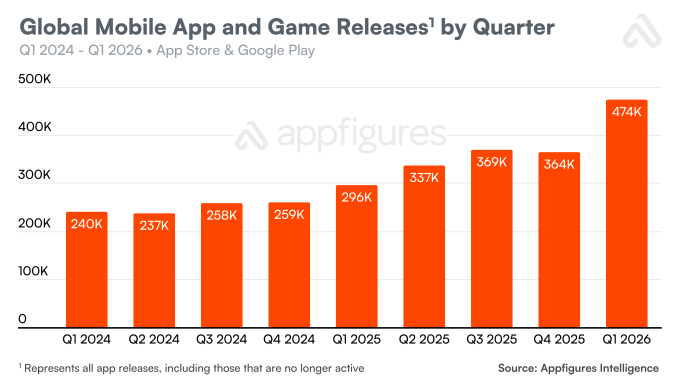
According to an analysis from market intelligence firm Appfigures, worldwide app releases climbed 60% year-over-year during the first quarter of 2026. The growth is even more pronounced on Apple’s platform, where iOS App Store releases jumped by 80% in the same period. The momentum has accelerated further in April, with total releases across both major stores up 104% compared to the same timeframe last year.
The AI Factor in Software Development
The surge provides a counter-narrative to industry leaders like Nothing CEO Carl Pei, who has argued that AI agents might eventually replace traditional apps. As Greg “Joz” Joswiak, Apple’s Senior Vice President of Worldwide Marketing, noted in a recent interview, rumors regarding the decline of the App Store “may have been greatly exaggerated.”
Analysts suggest that tools like Replit and Claude Code have lowered the technical barrier to entry. By enabling users without formal coding expertise to build functional software, AI is fueling a new “gold rush” for mobile developers.
Shift in Popular App Categories
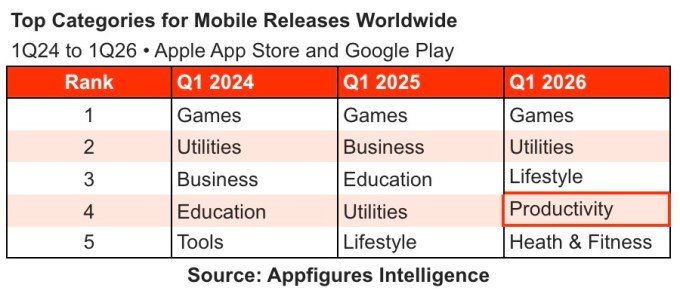
While mobile games remain the most frequent category for new releases, the composition of the App Store is evolving. Data for Q1 2026 highlights a shift in focus toward functional utilities:
- Games: Retain the top position for volume.
- Utilities: Have climbed to the No. 2 spot.
- Lifestyle: Advanced from No. 5 to No. 3.
- Productivity: Now ranks within the top five.
- Health and Fitness: Rounds out the top five categories.
Moderation Challenges Ahead
The rapid increase in submissions has placed significant strain on Apple’s review processes. High-profile incidents, such as the removal of the rewards app Freecash and a malicious crypto app that reportedly drained $9.5 million from users, have highlighted the risks of this influx.
While Apple has previously maintained that it stops billions in fraudulent transactions—citing 2024 data where it rejected over 320,000 spammy or copycat submissions—critics argue the current pace of development requires a more robust monitoring system. Observers like John Gruber have suggested the need for a dedicated team to identify and remove fraudulent apps that gain traction, a requirement likely to become more pressing as AI-assisted development continues to lower the barrier for bad actors.