Framework Launches Compact Desktop PC for AI and Gaming
Framework, the company widely recognized for its repairable and modular laptop designs, is officially entering the desktop market. The new Framework Desktop is a ultra-compact 4.5L machine built around a mini-ITX mainboard, positioning itself as a high-performance solution for both gaming enthusiasts and users focused on local AI inference.
The device leverages AMD’s latest Strix Halo architecture, also known as the Ryzen AI Max series. This all-in-one processing unit is central to the machine’s capabilities, enabling it to handle demanding large language models—such as Llama 3.3 70B—using tools like Ollama and llama.cpp. According to the company, the system is also capable of running various open-weight models from developers like Mistral, Nous, Hermes, and DeepSeek.
Design and Hardware Specifications
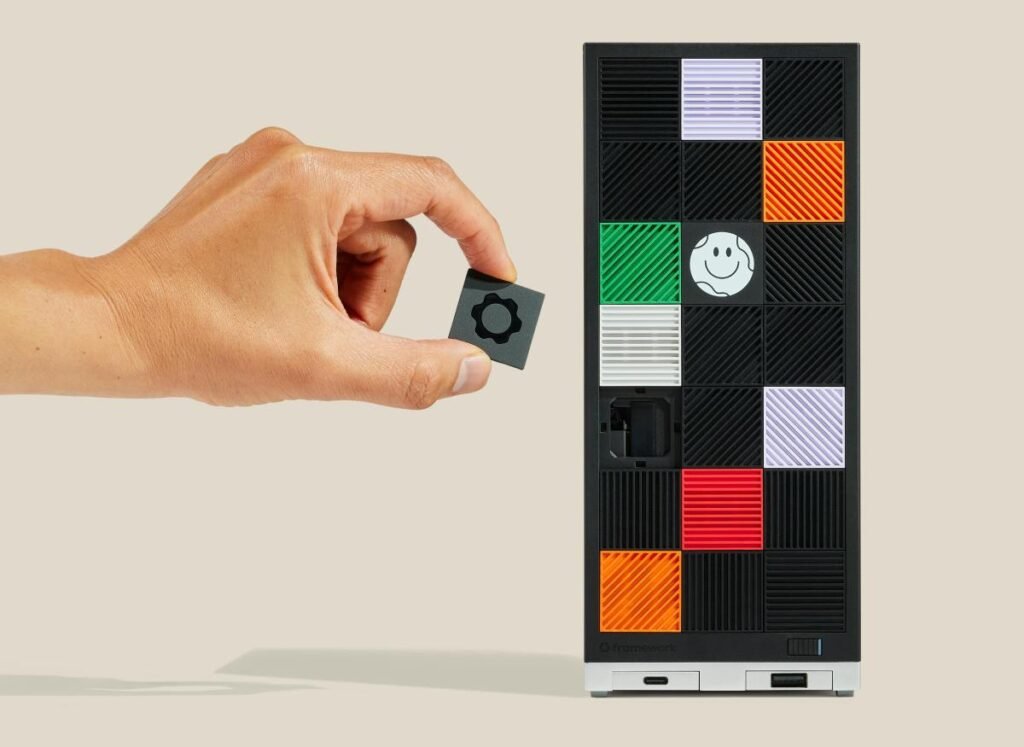
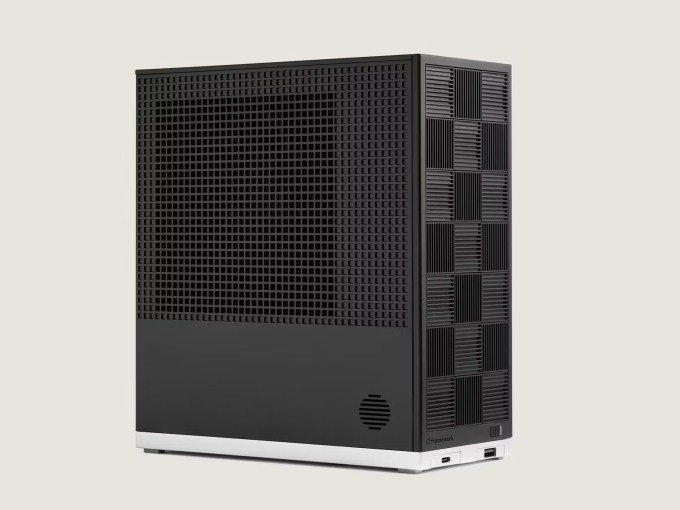
Despite its performance claims, the chassis is notably small, measuring less than an Xbox Series X or a PlayStation 5. The aesthetic is highly customizable, featuring 21 interchangeable plastic square tiles on the front panel that users can select during purchase.
Framework has maintained its signature modular approach through its expansion card system. The desktop includes two slots at the front and two at the back, allowing users to configure connectivity options such as USB-A, USB-C, headphone jacks, SD card readers, or storage expansion modules.
Internal hardware configurations include:
- Ryzen AI Max+ 395: 16 CPU cores, 40 graphics cores, and 80MB of cache.
- Ryzen AI Max 385: 8 CPU cores, 32 graphics cores, and 40MB of cache.
- Storage: Two M.2 2280 NVMe SSD slots.
The Memory Trade-off
A significant departure from Framework’s typical modular philosophy is the memory. To achieve the 256GB/s bandwidth required by the Ryzen AI Max processors, the LPDDR5x RAM is soldered directly to the mainboard, offering between 32GB and 128GB of capacity.
“We spent months working with AMD to explore ways around this, but ultimately determined that it wasn’t technically feasible to land modular memory at high throughput with the 256-bit memory bus,” Framework CEO Nirav Patel explained on the company blog.
The system supports Windows and various Linux distributions, including Ubuntu, Fedora, and the gaming-centric Bazzite. Pricing begins at $1,099 for the base model, with the high-end version reaching $1,999. Preorders are currently available, with shipments expected to commence in early Q3 2025.