Anthropic’s Claude 3.7 Sonnet Plays Pokémon on Twitch
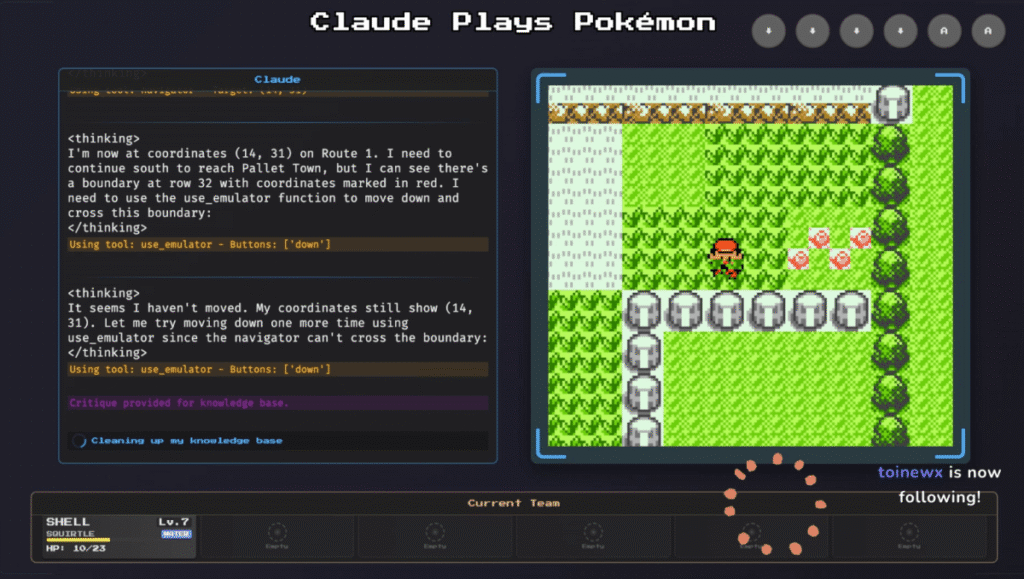
Anthropic has launched a live experiment on Twitch featuring its latest AI model, Claude 3.7 Sonnet, navigating the classic video game Pokémon Red. The Claude Plays Pokémon broadcast serves as a real-time demonstration of how the model processes logic and decision-making within a structured, rule-based environment.
While researchers have long used titles like Street Fighter or Pictionary as unconventional testing grounds for new technology, Anthropic views this specific challenge as a practical benchmark. The goal is to observe how the model “thinks” through puzzles that require both spatial awareness and goal-oriented progression.
Reasoning Capabilities in Action
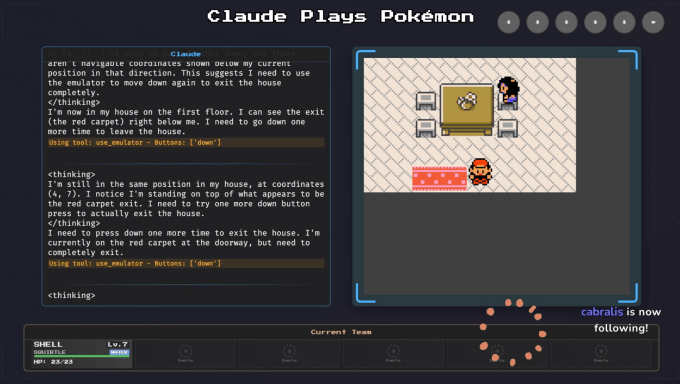
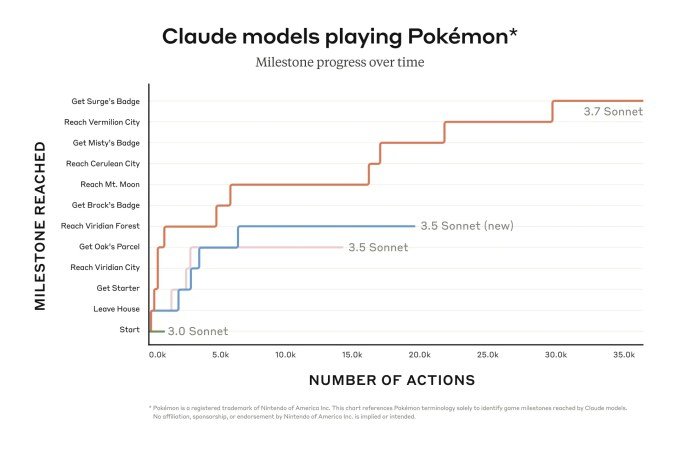
The performance of Claude 3.7 Sonnet highlights the shift toward “reasoning” models, similar to OpenAI’s o3-mini or DeepSeek’s R1. While its predecessor, Claude 3.5 Sonnet, struggled with basic tasks like leaving the player’s home in Pallet Town, the new version has successfully secured three gym leader badges.
However, the stream also reveals the limitations of even the most advanced models:
- Navigation errors: The AI was temporarily stumped by a simple rock wall, unable to process the path around it until it eventually adjusted its strategy.
- Identification confusion: During a search for Professor Oak, the model misidentified other non-player characters (NPCs) as the professor, despite having interacted with them previously.
- Processing speed: The gameplay is notably deliberate, with the model spending significant time “contemplating” each move, a contrast to the rapid pace of human play.
A Shift in Digital Participation
The stream evokes memories of Twitch Plays Pokémon, the viral 2014 social experiment where thousands of users attempted to control the game simultaneously. While that project was defined by communal chaos and shared goals, the current AI-led iteration reflects a broader shift in online behavior.
Where users were once active participants, they are now spectators of AI performance. This reflects a growing trend in the digital landscape, as interactive, communal experiences increasingly give way to solitary, AI-mediated activities.