
Google Launches AI Edge Eloquent App for Offline Dictation
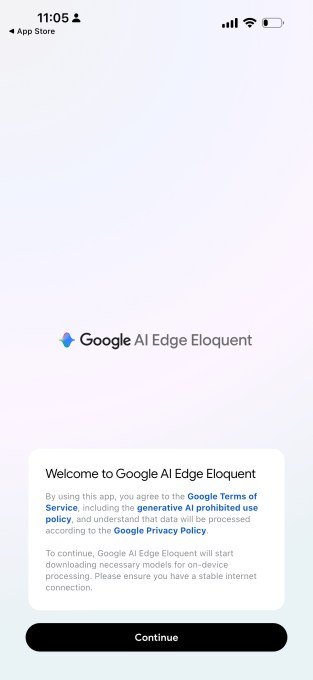
Google has introduced a new tool for mobile users seeking more refined speech-to-text capabilities. The company recently released “Google AI Edge Eloquent,” an offline-first dictation application for iOS designed to compete with existing transcription tools like Wispr Flow, SuperWhisper, and Willow.
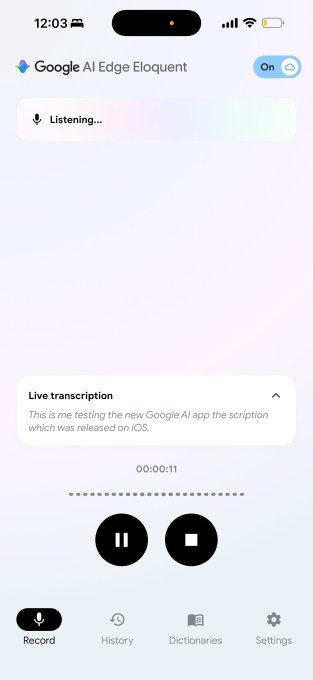
The application is available as a free download and functions by utilizing on-device Gemma-based automatic speech recognition (ASR) models. Once these models are downloaded, users can dictate content directly on their devices without needing an active internet connection. The software provides live transcription and automatically removes verbal stumbles, such as “um” or “ah,” to produce cleaner text.
Core Features and Customization
Beyond simple transcription, the app offers several post-processing options to adjust the tone and length of the dictated text. Users can select from presets such as “Key points,” “Formal,” “Short,” or “Long” to transform their input.
The application includes specific functionalities for power users:
- Cloud vs. Local Mode: Users can disable cloud processing for complete privacy or enable it to leverage cloud-based Gemini models for more advanced text cleanup.
- Contextual Integration: The app can import specific names, jargon, and keywords from a user’s Gmail account.
- Custom Vocabulary: Users have the ability to manually add specific words to the app’s recognition list.
- Transcription Analytics: The interface tracks session history, including words-per-minute speed and total word counts.
“Google AI Edge Eloquent is an advanced dictation app engineered to bridge the gap between natural speech and professional, ready-to-use text,” the company stated in its App Store description. “Unlike standard dictation software that transcribes stumbles and filler words verbatim, Eloquent utilizes AI to capture your intended meaning.”
Future Android Plans
Although the app is currently exclusive to iOS, documentation within the App Store indicates that an Android version is in development. The proposed Android build would feature system-wide integration, allowing the app to function as a default keyboard and incorporate a floating button for quick access to transcription from any application.