
Kin Health Raises $9M to Launch Patient-Focused AI Notetaker
Kin Health, a startup dedicated to simplifying medical information for patients, has raised $9 million in a seed funding round led by Maveron. The company aims to bridge the gap in the booming AI-assisted healthcare market by focusing on the patient experience rather than administrative tasks for providers.
The new application functions similarly to existing meeting transcription tools. It records consultations with physicians, generates summaries of medical advice, and highlights actionable next steps. Users can share these summaries with family members or caregivers and input specific questions to prepare for future appointments.
Building a Personal Health Graph
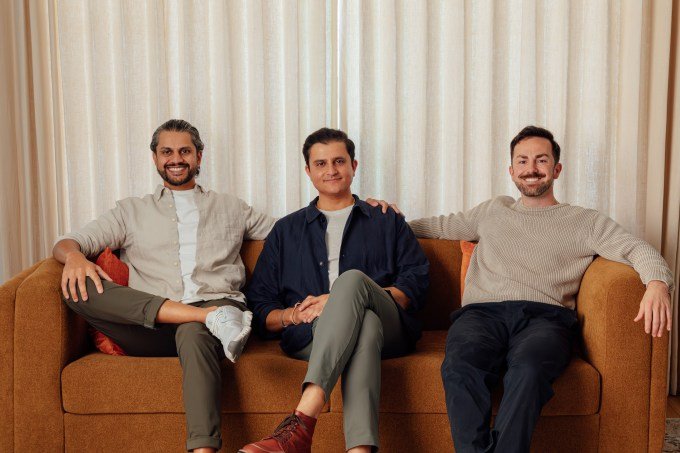
The founding team includes physicians Arpan and Amit Parikh, alongside Kyle Alwyn, a co-founder of the online prescription service HeyDoctor. GoodRx co-founders Doug Hirsch and Trevor Bezdek are also involved as executive chairmen.
According to Alwyn, the primary vision for Kin Health is to centralize fragmented medical data. “We have a lot of these storage cabinets where our health data can live, but we don’t have a way to convert that into a utility that we can use to drive our behavioral change. Our goal is to create this health graph where we can store your information from multiple different sources,” Alwyn stated.
Technology and Privacy Standards
The platform processes information through specialized medical models, moving from raw transcription to a structured clinical narrative and finally a user-friendly summary. The company notes that it employs rigorous observation of these outputs to maintain accuracy.
Regarding data security, Kin Health asserts that all information is encrypted and remains private by default. While the tool is not HIPAA-certified—as it is designed for direct patient use rather than institutional clinical documentation—the company claims it adheres to equivalent privacy protocols.
Challenges in AI Healthcare
Despite the growth of the sector, which saw over $600 million in revenue last year according to a report by Menlo Ventures, the technology faces scrutiny. Experts have raised concerns regarding:
- Data security and consent mechanisms
- Potential for AI “hallucinations” and errors
- Effectiveness in transcribing regional accents or muffled speech
- The clinical quality of AI-generated notes
Dr. Rebecca Mishuris, VP at Mass General Brigham, emphasized that physician oversight remains essential. “Generative AI will hallucinate; that is the nature of a technology built on patterns and prediction. That is why it is so important for clinicians to review the drafted notes before signing them,” she noted.
Business Model and Future Roadmap
Kin Health plans to remain free for users, opting for a monetization strategy based on referrals to labs and specialists, similar to the model utilized by GoodRx. Natalie Dillon, a partner at Maveron, highlighted the startup’s unique market position: “It’s not beholden to any single health network or EHR relationship. It’s built to serve the patient, not the institution.”
Looking ahead, the company intends to expand its capabilities by integrating data from other sources, such as electronic health record (EHR) systems. The seed round also included participation from Town Hall Ventures, Eniac Ventures, Flex Capital, Foundry Square Capital, Pear VC, The Family Fund, and over 30 individual physicians and angel investors.