
Threads Launches Direct Messaging for Desktop Users
Threads is officially expanding its messaging capabilities to the web, allowing users to manage direct conversations via desktop browsers. This update brings the platform’s one-on-one and group chat features to a larger screen, closing a functional gap between the Meta-owned network and competitors like X and Bluesky.
Connor Hayes, head of Threads at Meta, confirmed the rollout on Tuesday, noting that web-based messaging was the most requested addition since direct messaging (DMs) first arrived on the app in July 2025. According to Hayes, the move is designed to support the platform’s most active users who rely on desktop sessions for extended periods.
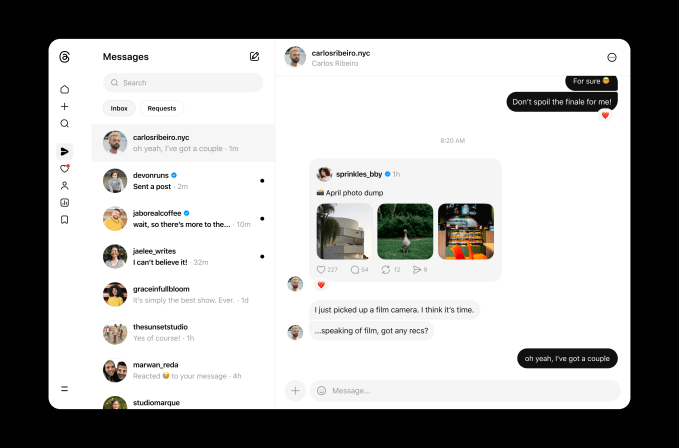
Navigating the New Web Inbox
The updated web interface introduces a dedicated “Messages” tab, providing direct access to the DM inbox. Key features include:
- A centralized inbox for managing existing conversations.
- A “Requests” folder to filter incoming messages from new contacts.
- Integrated search functionality to find specific threads.
- The ability to initiate new chats directly from the browser.
This implementation was previously teased by Hayes in April. Data from Meta indicates that messaging has evolved into a pillar of the user experience; the platform currently sees an average of 350 million DMs sent weekly, representing a 30% increase in message volume per week since the beginning of the year.
Focus on Real-Time Interaction
Beyond standard direct messaging, Threads is experimenting with new ways to facilitate communication. The platform recently introduced “Live Chats,” a feature designed for real-time engagement during major cultural events, debuting within the NBA community.
These Live Chats support:
- Real-time exchange of photos, videos, links, and emoji reactions.
- An active participation limit of 150 users.
- A “spectator” mode that allows users to view conversations, vote in polls, and react to content once the participant cap is reached.
These infrastructure updates underscore Meta’s strategy to position Threads as a hub for interactive dialogue, moving the social network further away from a static feed toward a more conversation-centric ecosystem.