Flipper One: Linux-Powered Pocket PC for Hackers Announced
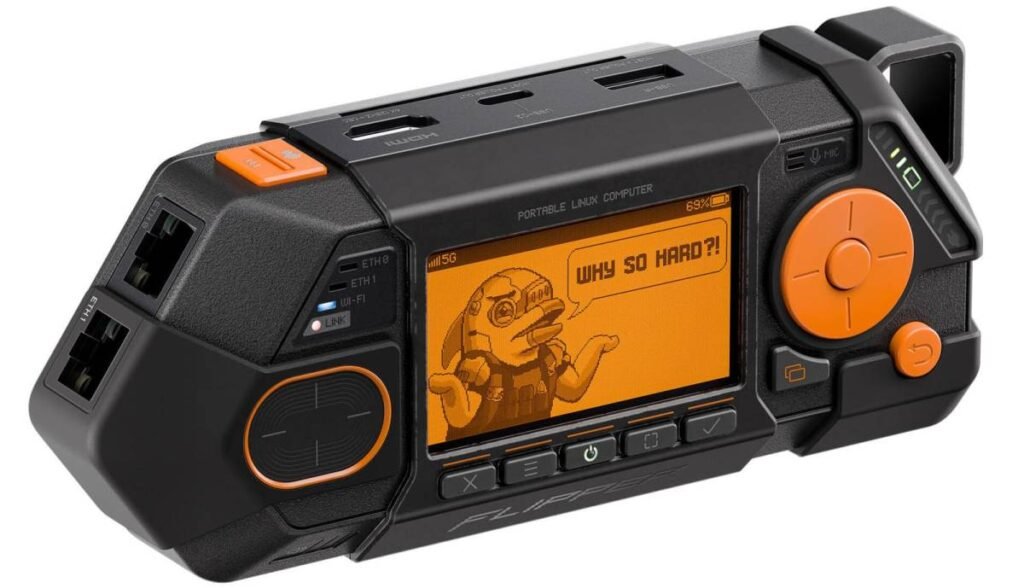
Flipper Devices, the company behind the widely popular Flipper Zero, has unveiled its latest project: the Flipper One. Unlike its predecessor, which focused on radio protocols, the new device functions as a portable, Linux-powered computer designed specifically for developers and hardware enthusiasts.
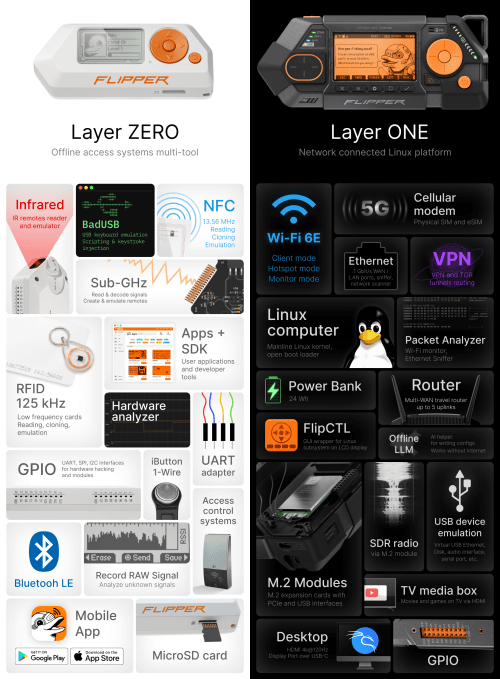
The company, which has surpassed 1 million units sold and $150 million in revenue with the Flipper Zero, clarifies that the One is not a direct successor. Instead, it operates on a fundamentally different technical layer, offering a modular platform for networking and local computing tasks.
Technical Architecture and Capabilities
The Flipper One utilizes a dual-processor design paired with 8 GB of RAM. The primary chip is an eight-core RK3576, which manages the open Linux environment, a Mali-G52 GPU, and an NPU capable of running local AI models. A secondary two-core Raspberry Pi RP2350 microcontroller handles essential hardware functions, such as the display, touchpad, buttons, and power management, allowing the device to remain operational even when the primary Linux system is powered down.
Connectivity options are extensive, featuring:
- Networking: Dual Gigabit Ethernet ports, USB Ethernet (5 Gbps), and Wi-Fi 6E (2.4/5/6 GHz).
- Expansion: An M.2 port for 5G modems, SDR modules, AI accelerators, or NVMe/SATA SSDs.
- Display: HDMI 2.1 output supporting 4K streaming at 120 Hz.
Software Roadmap and Development
CEO Pavel Zhovner detailed in a recent blog post that the company is working on a custom “Flipper OS.” This system aims to solve the difficulties of managing software packages on standard Linux distributions by allowing users to toggle between preconfigured profiles without needing to re-flash SD cards.
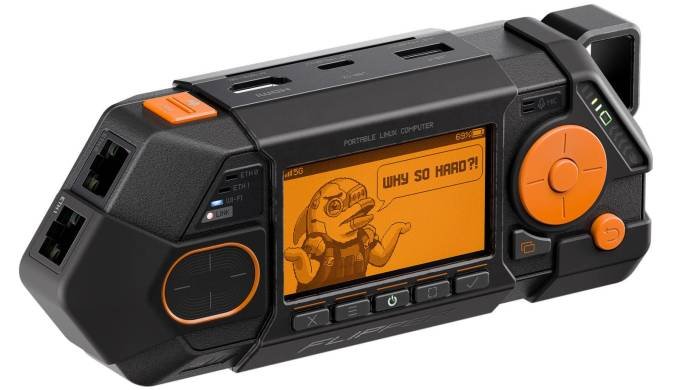
Furthermore, Flipper Devices has collaborated with the open-source consulting firm Collabora to ensure that the RK3576 chip’s support is pushed into the mainline Linux Kernel. While the project is currently in the development phase, the team is actively inviting the community to assist in building out the software stack, including the FlipCTL interface for touch and D-pad controls.
While features like hardware video decoding and NPU-based AI remain under development, the company estimates that the final device will likely retail for under $350 for the base configuration. Those interested in the project can join the community documentation for further updates.