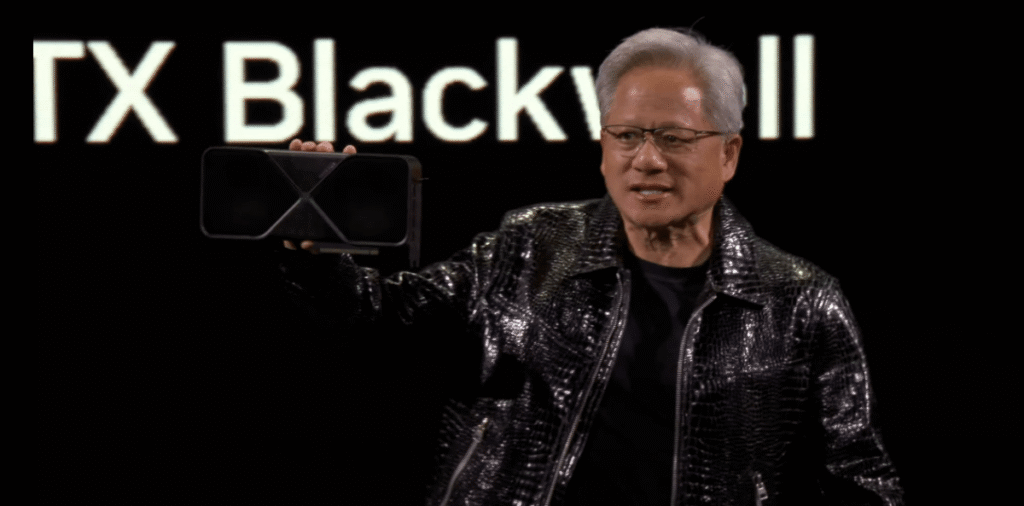
Nvidia Unveils RTX 5090: Blackwell GPUs Arrive at CES 2025
Nvidia officially launched its next-generation Blackwell graphics processing units at CES 2025 on Monday, headlined by the flagship RTX 5090. The new series aims to redefine high-end PC performance through significant architectural gains in AI-driven rendering and ray tracing.
Technical Specifications and Performance
The RTX 5090 is built on the Blackwell architecture, featuring 92 billion transistors. Nvidia reports a significant leap in power, claiming the new hardware can reach up to twice the performance of the previous-generation RTX 4090. Key technical markers for the flagship card include:
- 4,000 AT TOPS
- 380 ray-tracing TFLOPS
- 1.8 TB/s bandwidth
During the keynote, the company showcased real-time demonstrations highlighting complex textures and advanced lighting capabilities, emphasizing that the 50-series introduces breakthroughs in neural shaders and digital human technologies.
Pricing and Availability
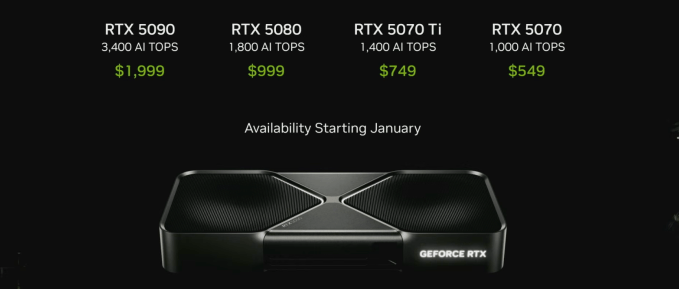
The premium hardware comes at a high price point. The RTX 5090 is priced at $2,000. Other models in the lineup include:
- RTX 5080: $999
- RTX 5070 Ti: $749
- RTX 5070: $549
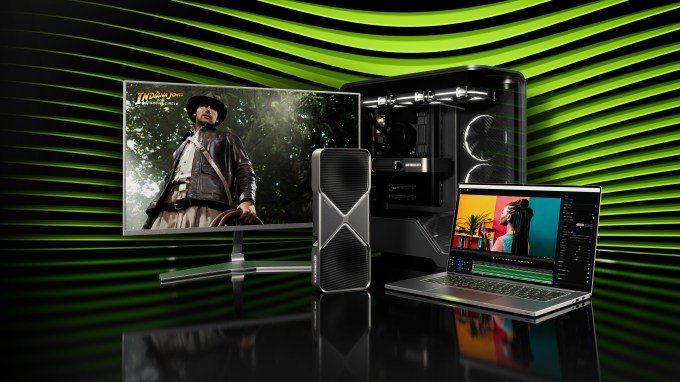
Laptop versions of these GPUs are also incoming, with top-end Blackwell-equipped notebooks starting just under $3,000. Devices featuring the 5090, 5080, and 5070 Ti are slated for release in March, while RTX 5070 laptops will follow in April. Major manufacturers, including Acer, ASUS, Dell, HP, Lenovo, MSI, and Razer, have confirmed designs for these new systems.
Industry Impact
Nvidia CEO Jensen Huang addressed concerns regarding supply chain constraints, stating that the company is proactively managing production to meet demand. Huang framed the launch as a pivotal moment for graphics technology.
“Blackwell, the engine of AI, has arrived for PC gamers, developers and creatives,” Huang stated. “Fusing AI-driven neural rendering and ray tracing, Blackwell is the most significant computer graphics innovation since we introduced programmable shading 25 years ago.” He further noted, “We used GeForce to enable AI, and now AI is revolutionizing GeForce.”