Physical Tech Redefines VR Immersion at SIGGRAPH
The future of Virtual Reality (VR) may not rely solely on pixel density or spatial audio. At the 50th SIGGRAPH conference in Los Angeles, researchers and tech giants showcased a pivot toward physical augmentation—using moving parts and tactile sensations to trick the human brain into accepting virtual environments as tangible space.
While the event featured a broad spectrum of visual effects and motion capture hardware, the most striking developments emerged from the “emerging technologies” hall. There, the consensus was clear: to solve the immersion problem, developers must look beyond the screen and into the physical world.
Meta’s Varifocal Shift
Meta introduced two experimental headsets: Butterscotch and Flamera. The Butterscotch prototype addresses a persistent limitation in current VR hardware: the inability of the eye to naturally focus on objects at varying distances.
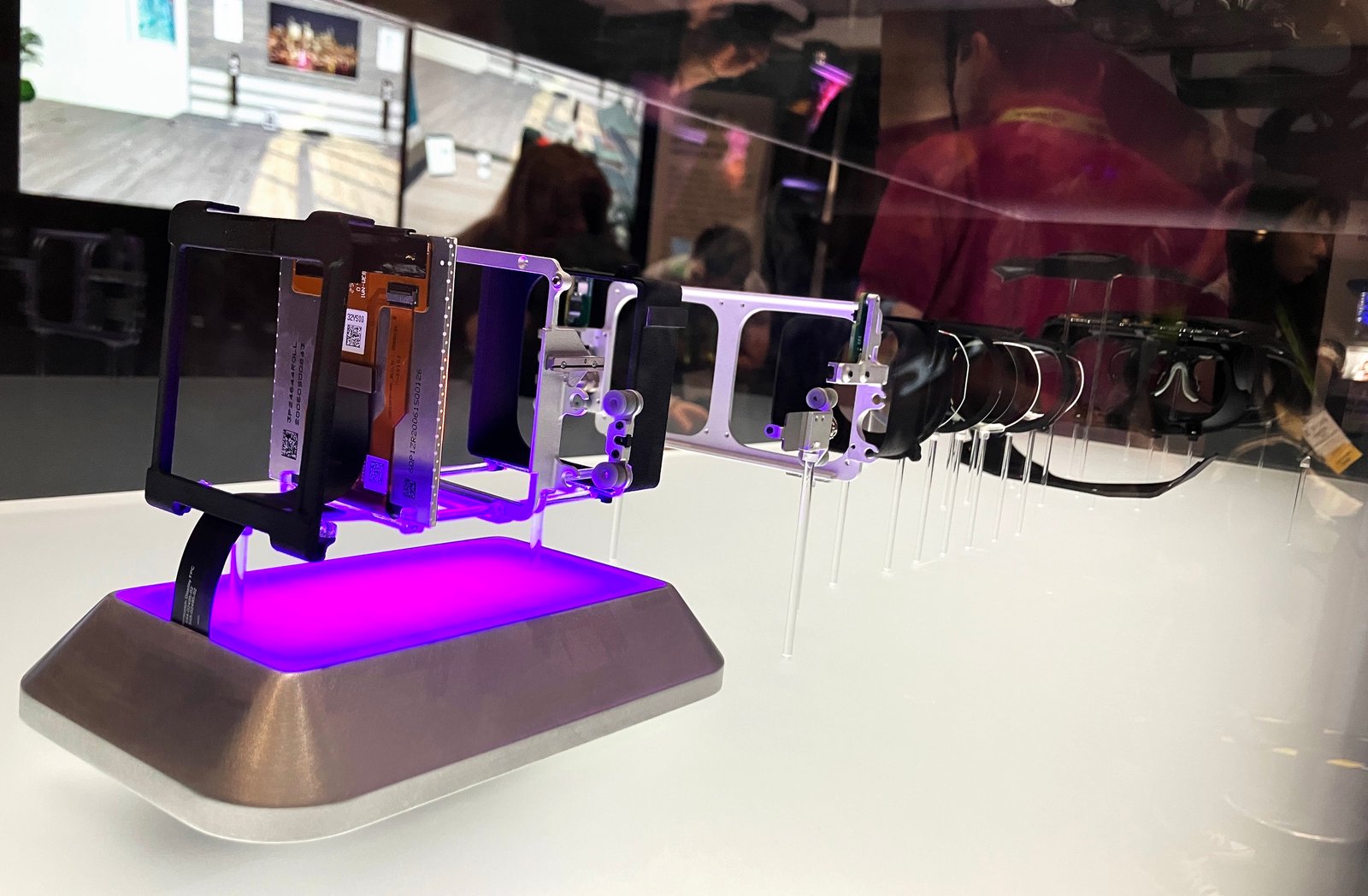
Typically, VR displays remain fixed, meaning that inspecting an object closely does not provide the expected visual clarity. The Butterscotch system utilizes gaze tracking to detect when a user focuses on a nearby object. It then physically slides the internal displays about 14 millimeters closer to the eyes. This mechanical adjustment allows for natural accommodation and convergence, creating a significantly sharper, more realistic focal experience.
Beyond Sight: Haptic and Kinetic Feedback
Other researchers are experimenting with radical methods to simulate physical forces:
- Sony’s Rumble Batons: Sony researchers demonstrated a controller mounted to a baton containing a motorized weight. By shifting the internal mass, the device simulates the feeling of an object’s weight, such as the opening of an umbrella or the recoil of a firearm.
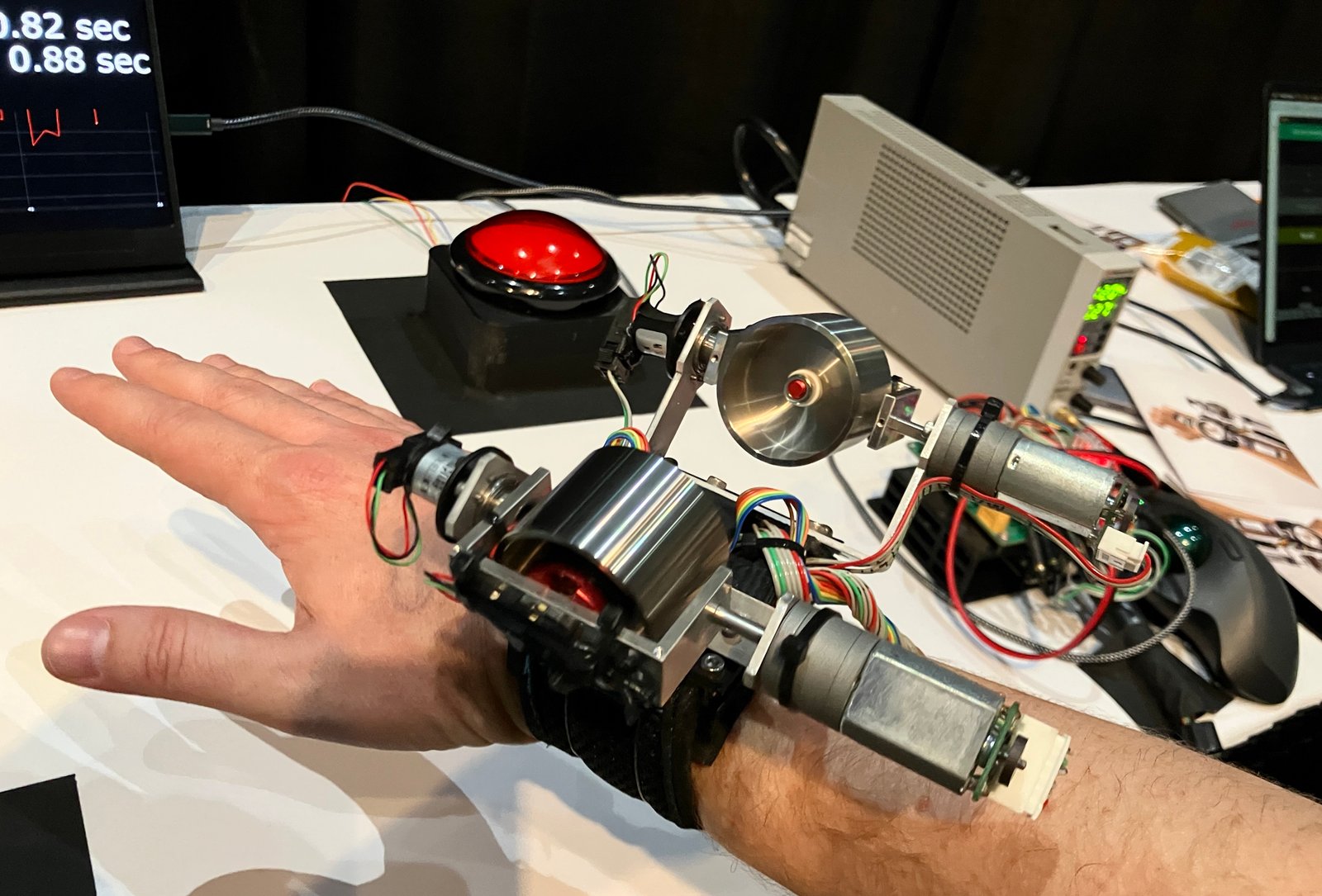
- SomatoShift: Developed at the University of Tokyo, this wristband uses spinning gyros to create precise force vectors. By opposing or accelerating hand movements, it provides subtle tactile resistance that mimics the physics of interacting with virtual objects.
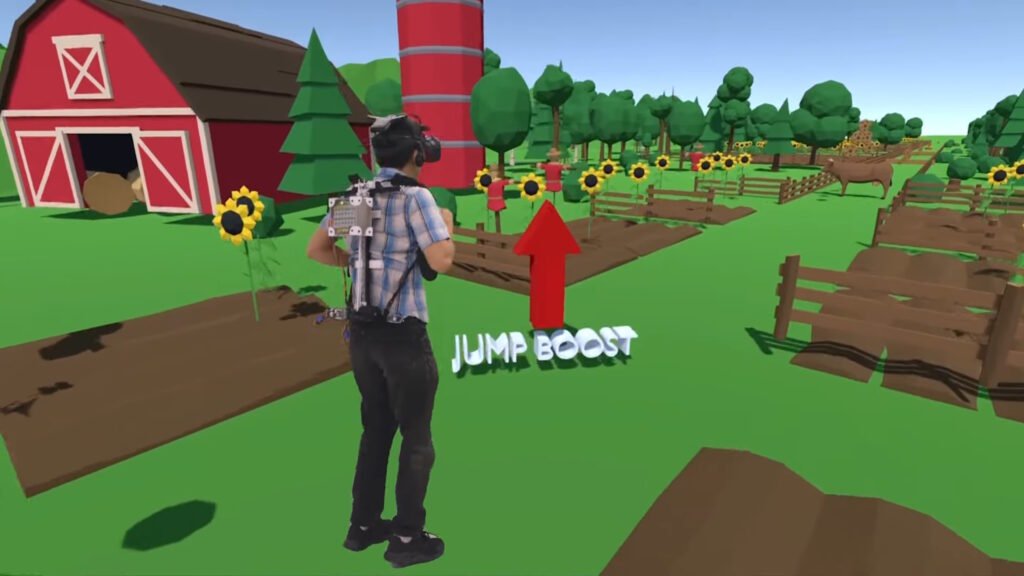
- JumpMod Backpack: The University of Chicago presented a motorized backpack that moves a weight vertically to simulate the sensation of jumping, lightening or accelerating the user’s perceived motion in virtual space.
Simulating Touch
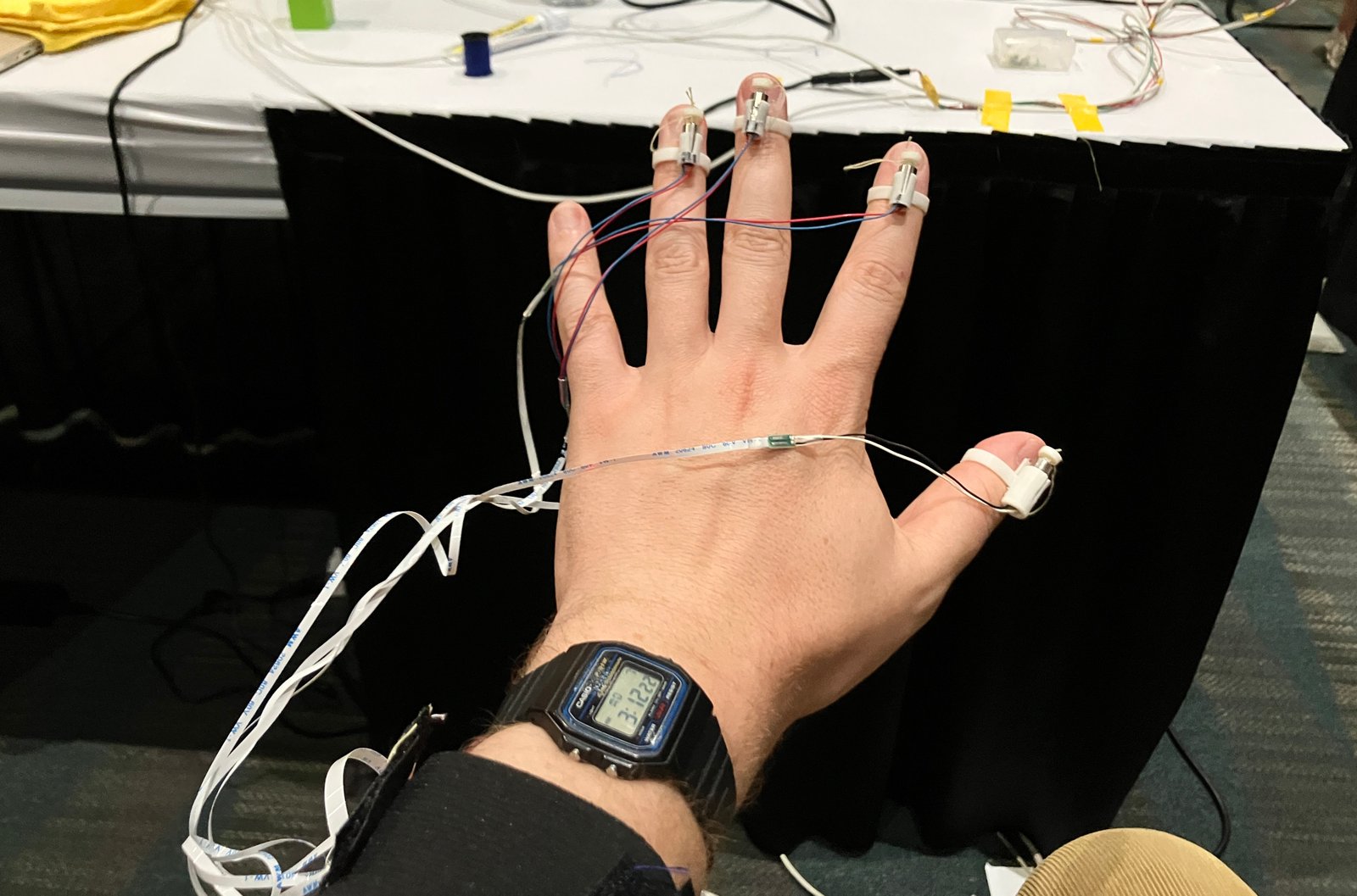
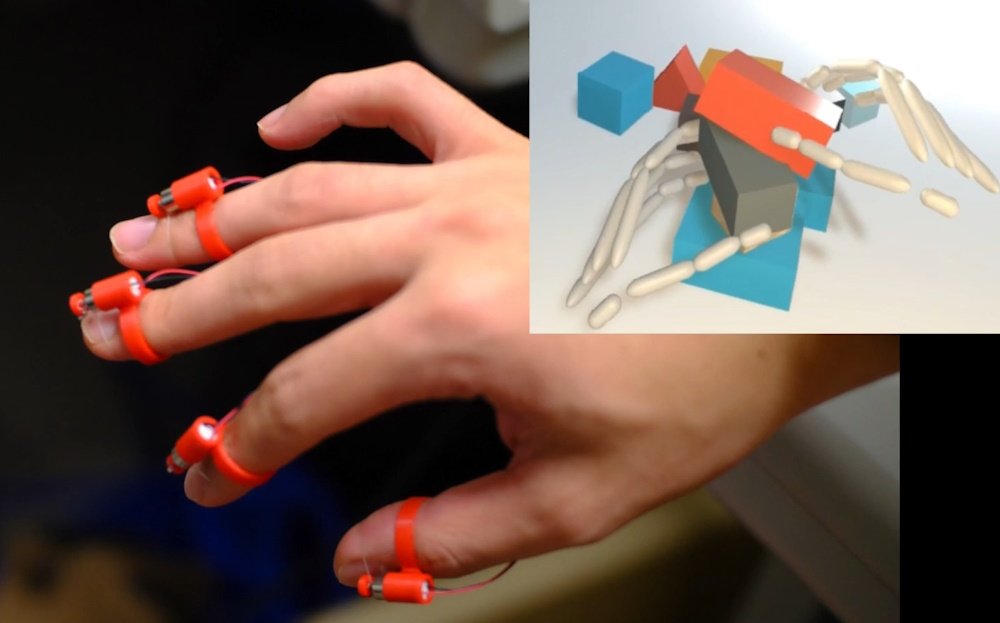
The Tokyo Institute of Technology tackled the challenge of fingertip interaction. Their setup involves four rings per hand, each equipped with a small motor and a thread loop around the fingertip. When a user touches a virtual object, the motor pulls the thread, providing a sensation of resistance against the finger pad.
While these systems remain experimental and often bulky, they underscore a shift in industry philosophy. Rather than abandoning VR due to mainstream adoption hurdles, researchers are doubling down on multi-sensory integration, aiming to turn virtual experiences into fully realized, tactile realities.