Spotify Expands AI-Powered Playlist Creator to US and Canada
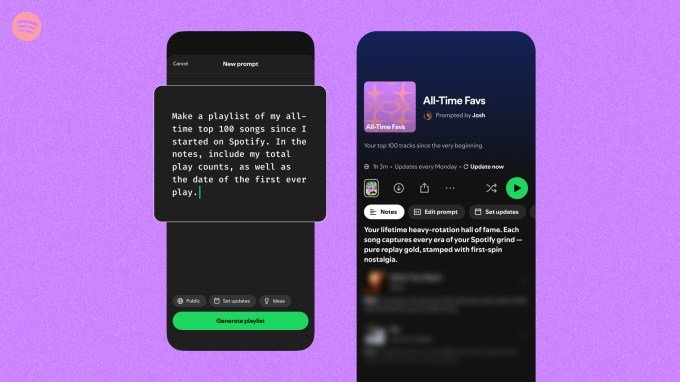
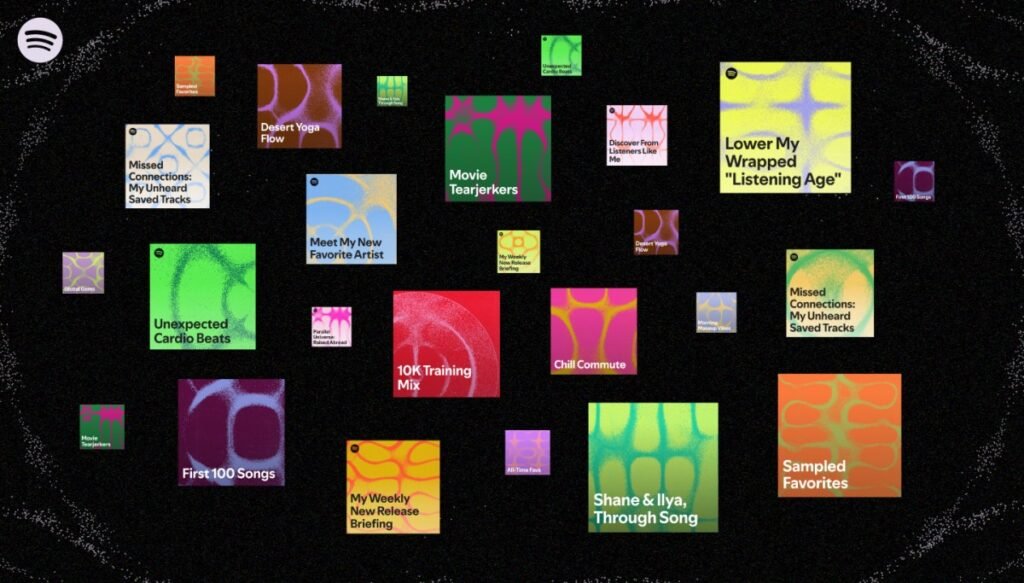
Spotify is bringing its advanced AI-driven playlist creation tool to Premium subscribers across the United States and Canada. Following an initial testing phase in New Zealand, the feature—dubbed Prompted Playlists—allows users to generate custom music selections simply by describing their desired vibe or intent in conversational language.
Beyond basic prompts
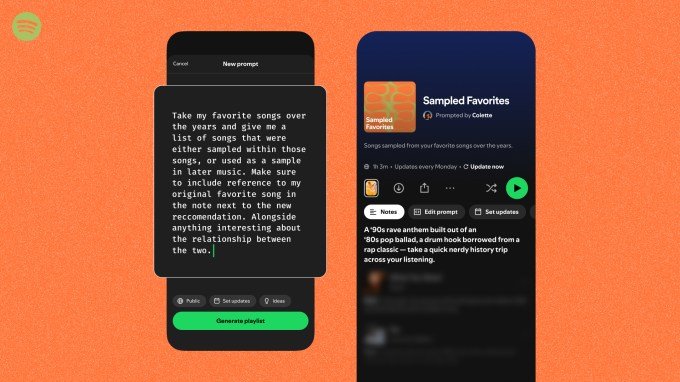
While Spotify introduced simpler AI-based playlist tools in 2024—focused on brief commands like “get focused at work”—this new iteration offers significantly more depth. The system is designed to handle complex, nuanced requests that do not require specialized musical terminology.
J.J. Italiano, head of Global Music Curation and Discovery at Spotify, suggests that the goal is to democratize the curation process. “For most people, curation isn’t a part of their job. You don’t always have the time or the energy to keep building the perfect playlist every time your mood changes, and that’s where prompted playlists will come in,” Italiano explained. “If you can describe a feeling, you can make a playlist.”
Technical capabilities and personalization
The AI engine functions by synthesizing real-time data, including music charts, cultural trends, and historical context, alongside the individual user’s entire listening history. Key features include:
- Granular Control: Users can request specific outcomes, such as asking the AI to introduce them to artists they have never heard before or excluding their own listening habits from the results.
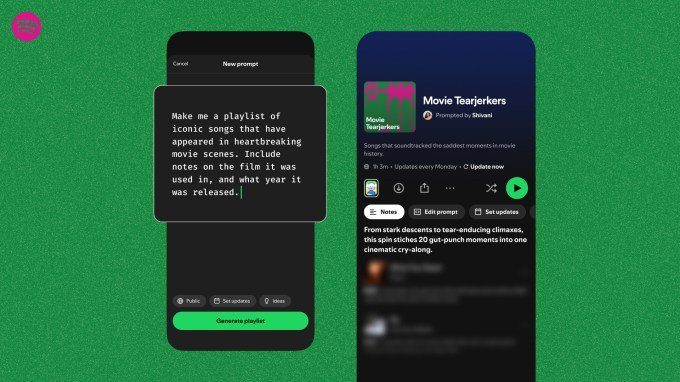
- Creative Freedom: Prompts can be inspired by abstract concepts, such as the weather or a favorite television show, rather than specific genres or decades.
- Shareability: Because the AI personalizes the output based on the user’s history, shared prompts will yield unique results for each individual, potentially creating a new category of “prompt creators.”
Beta status and future rollout
Spotify considers this the “next evolution” of its AI products. Although it offers deeper capabilities than the previous version, both tools will remain available to users simultaneously. The company acknowledged that this dual-product approach might initially cause some confusion among subscribers.
As the feature remains in beta, usage limits are currently in place. The tool is available exclusively in English, and Spotify has not yet provided a timeline for a global release, stating that it intends to gather data from these initial markets to guide future expansion.